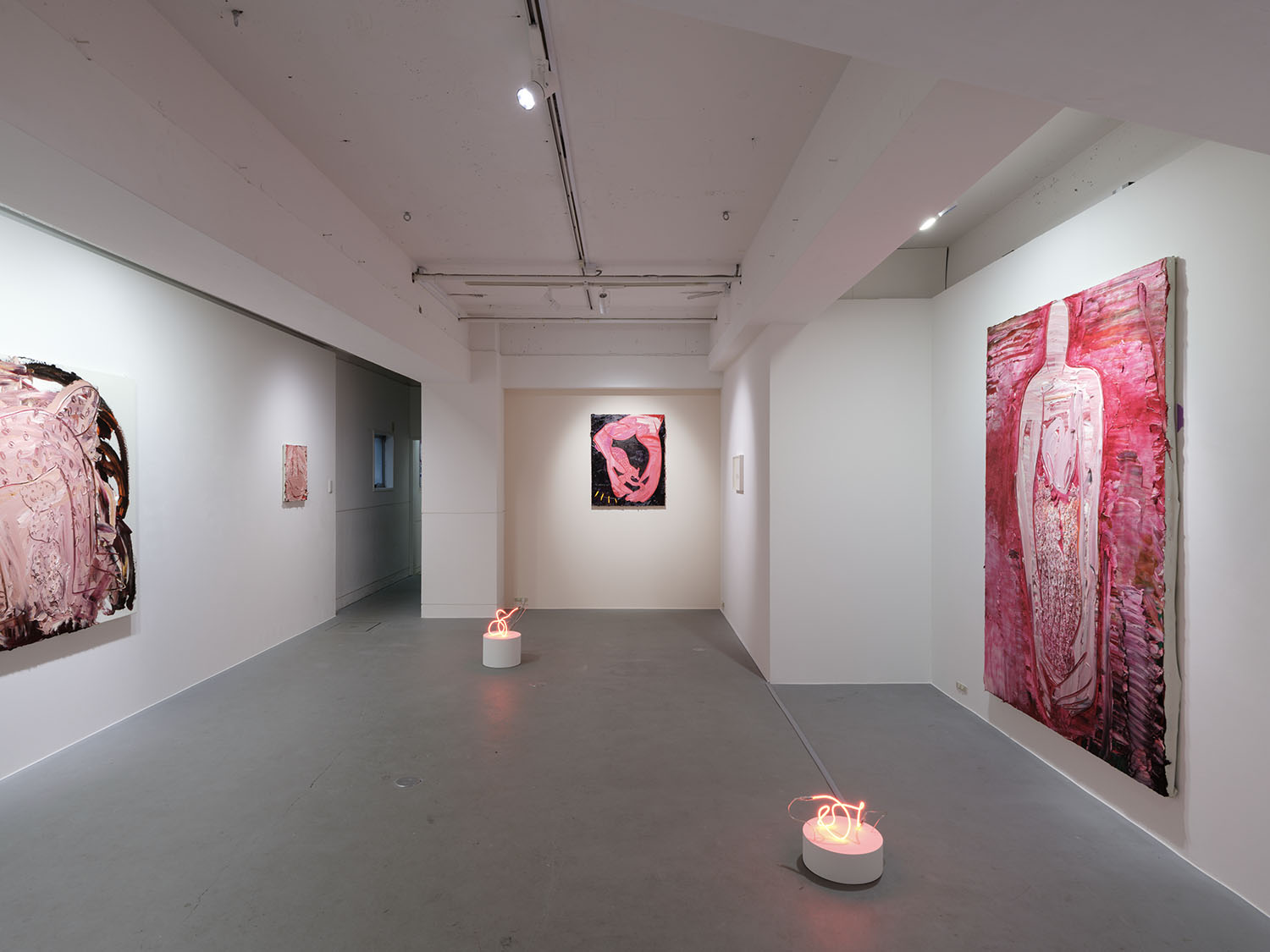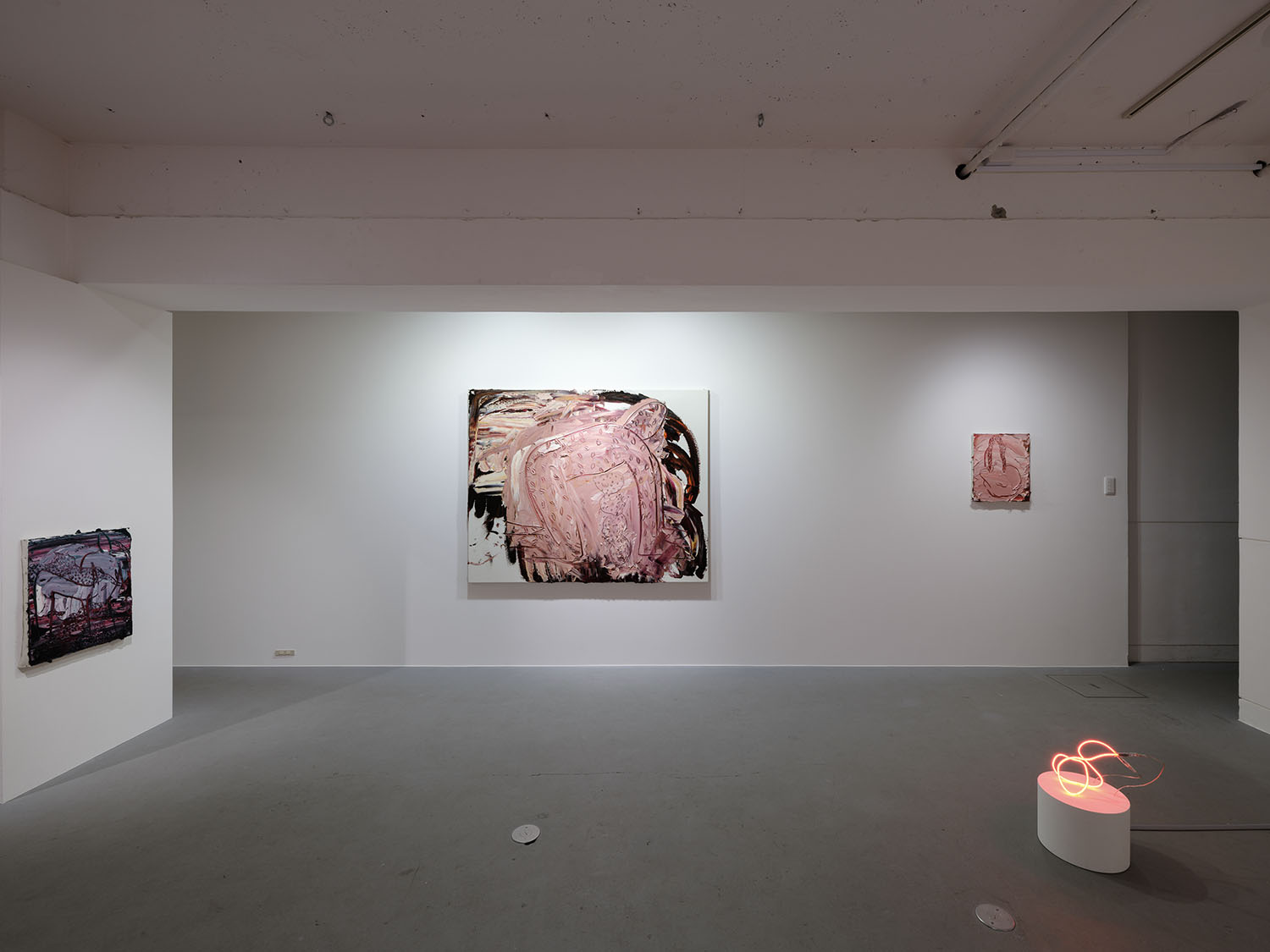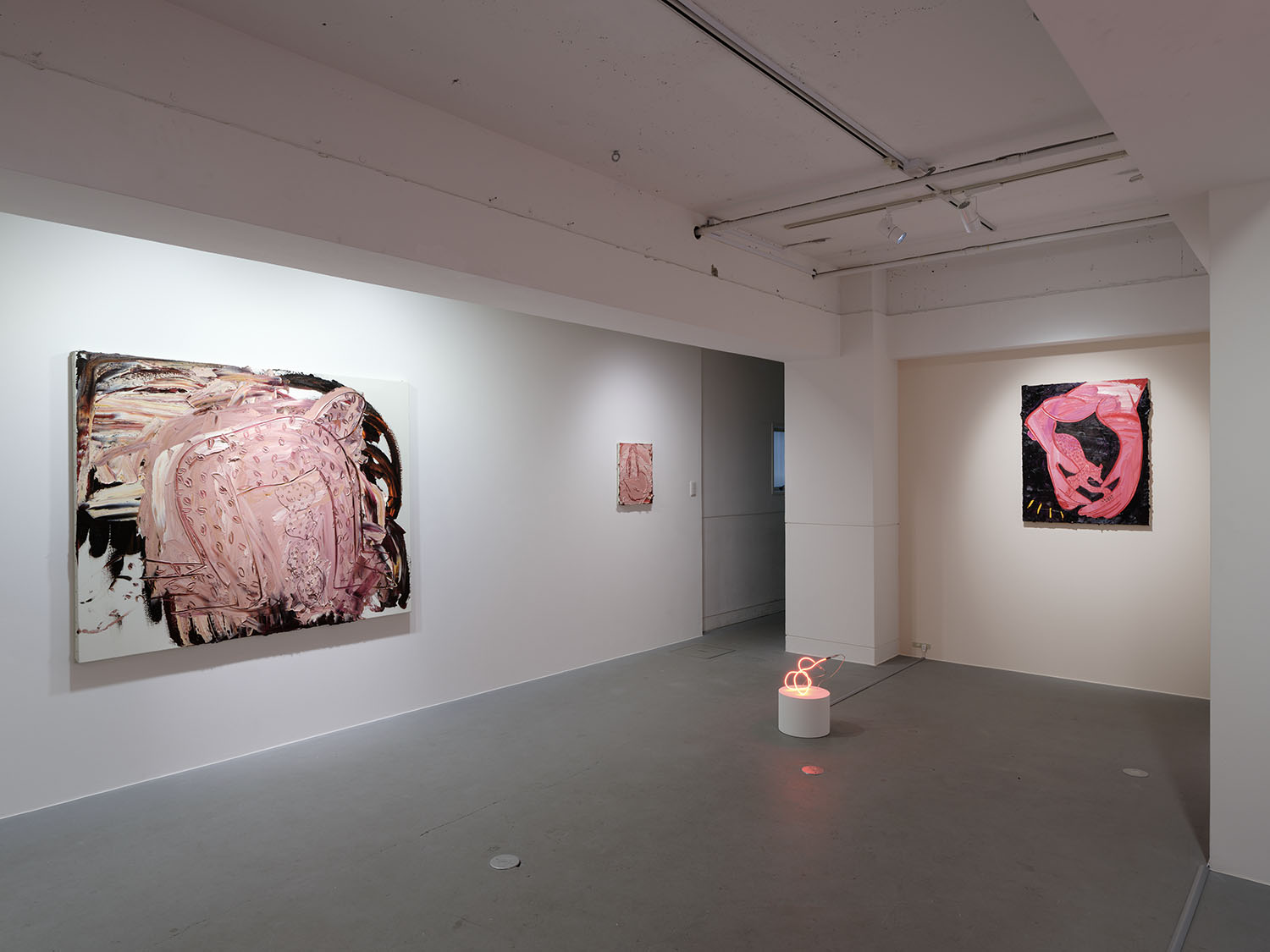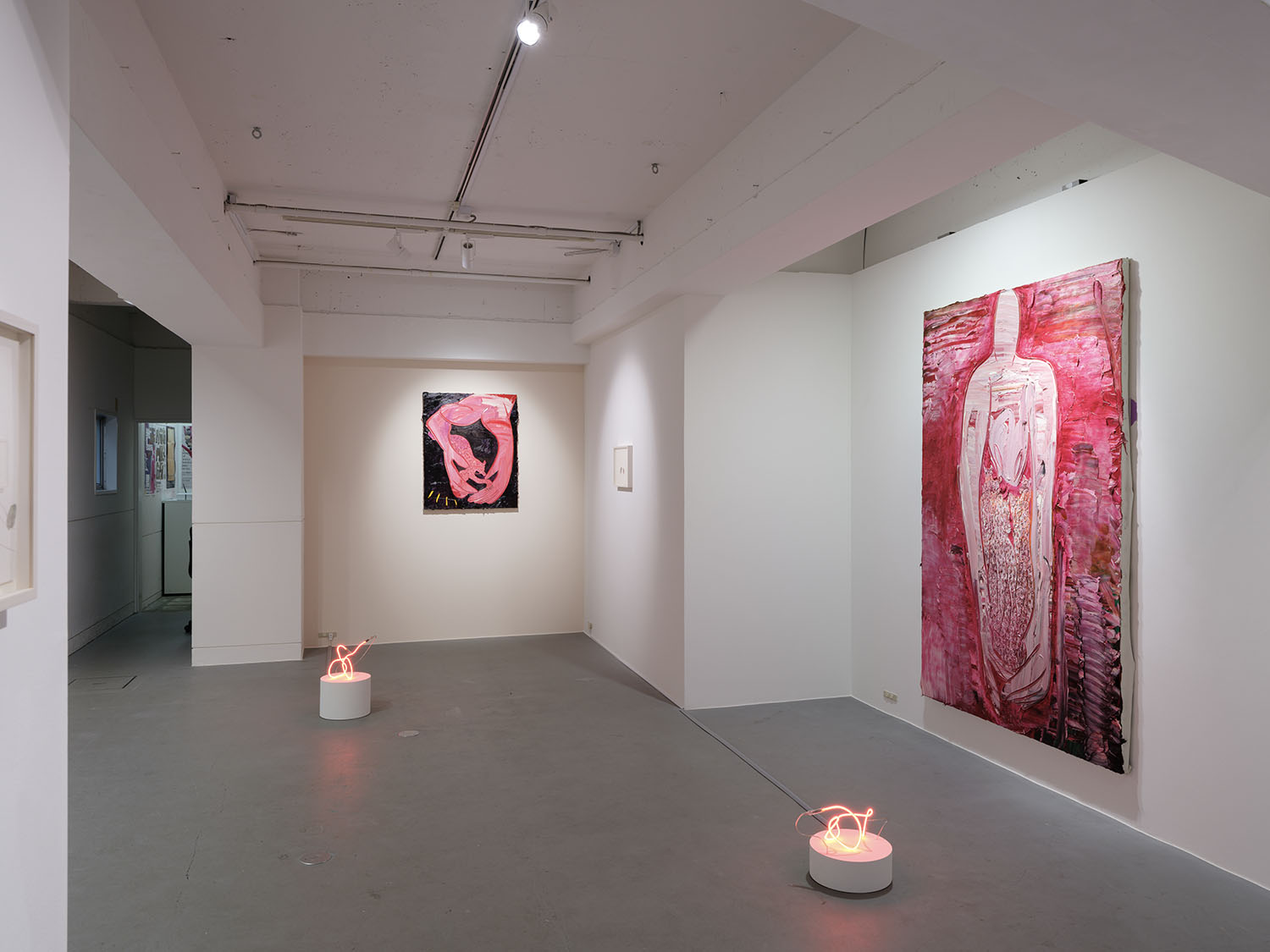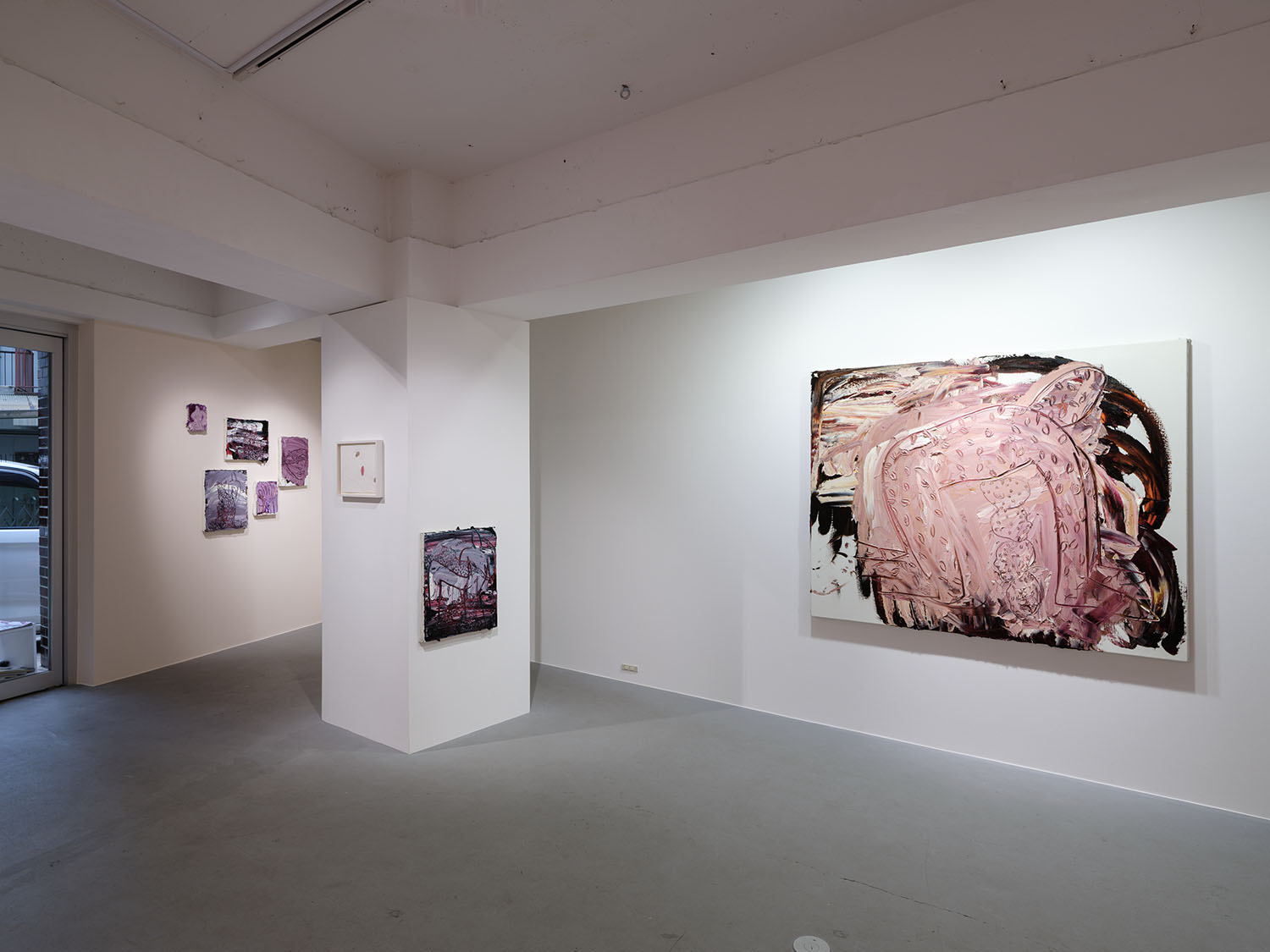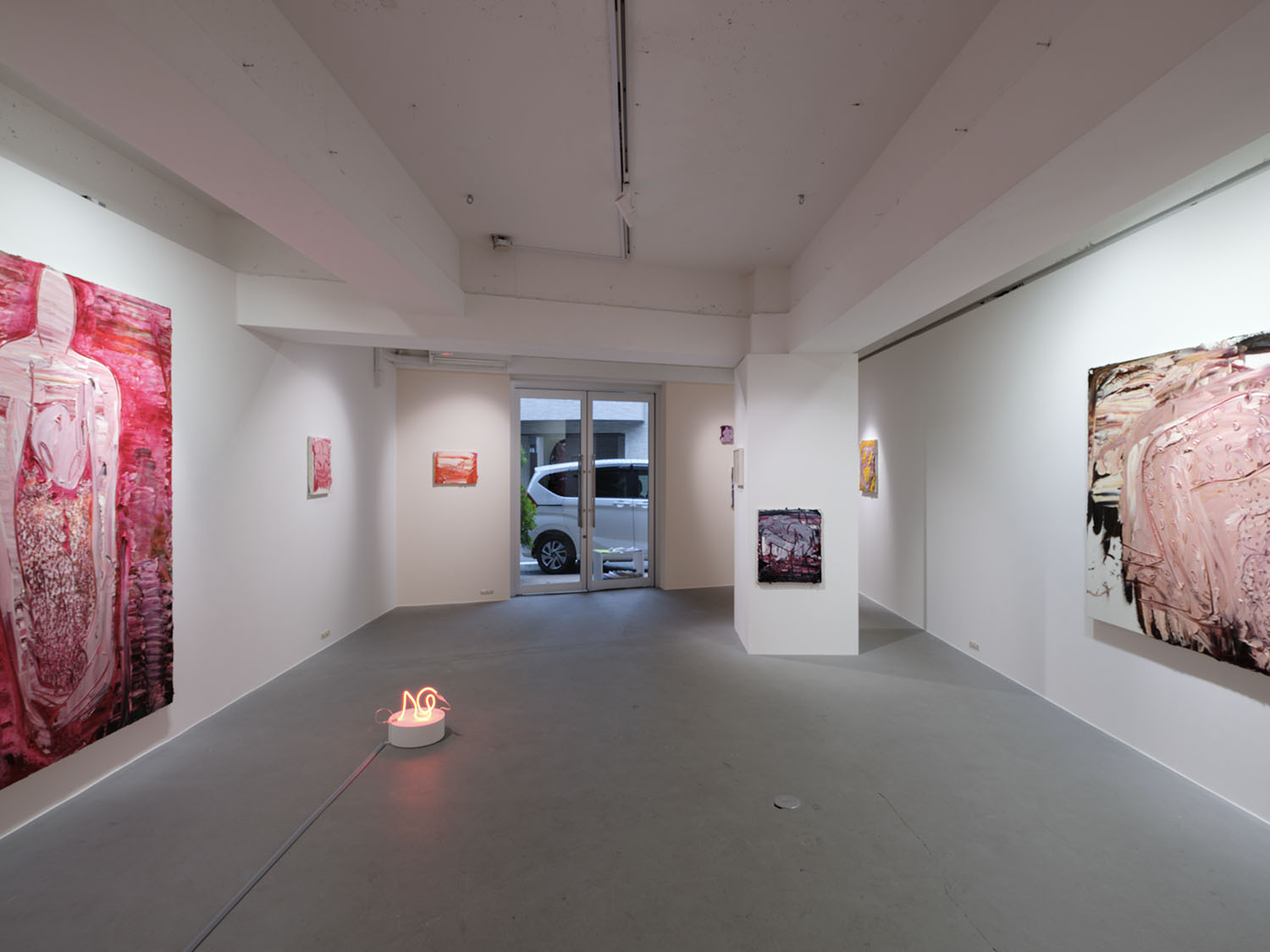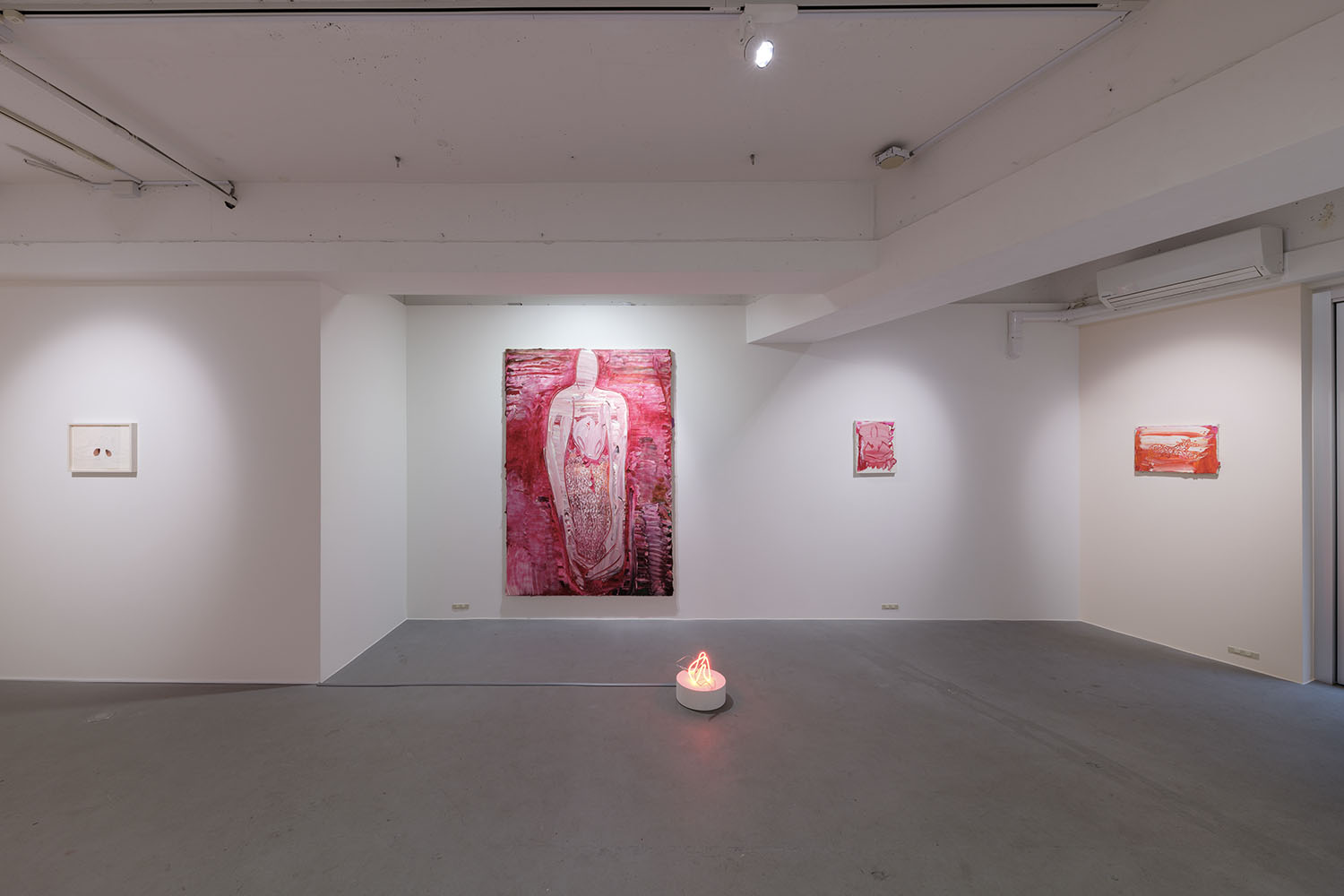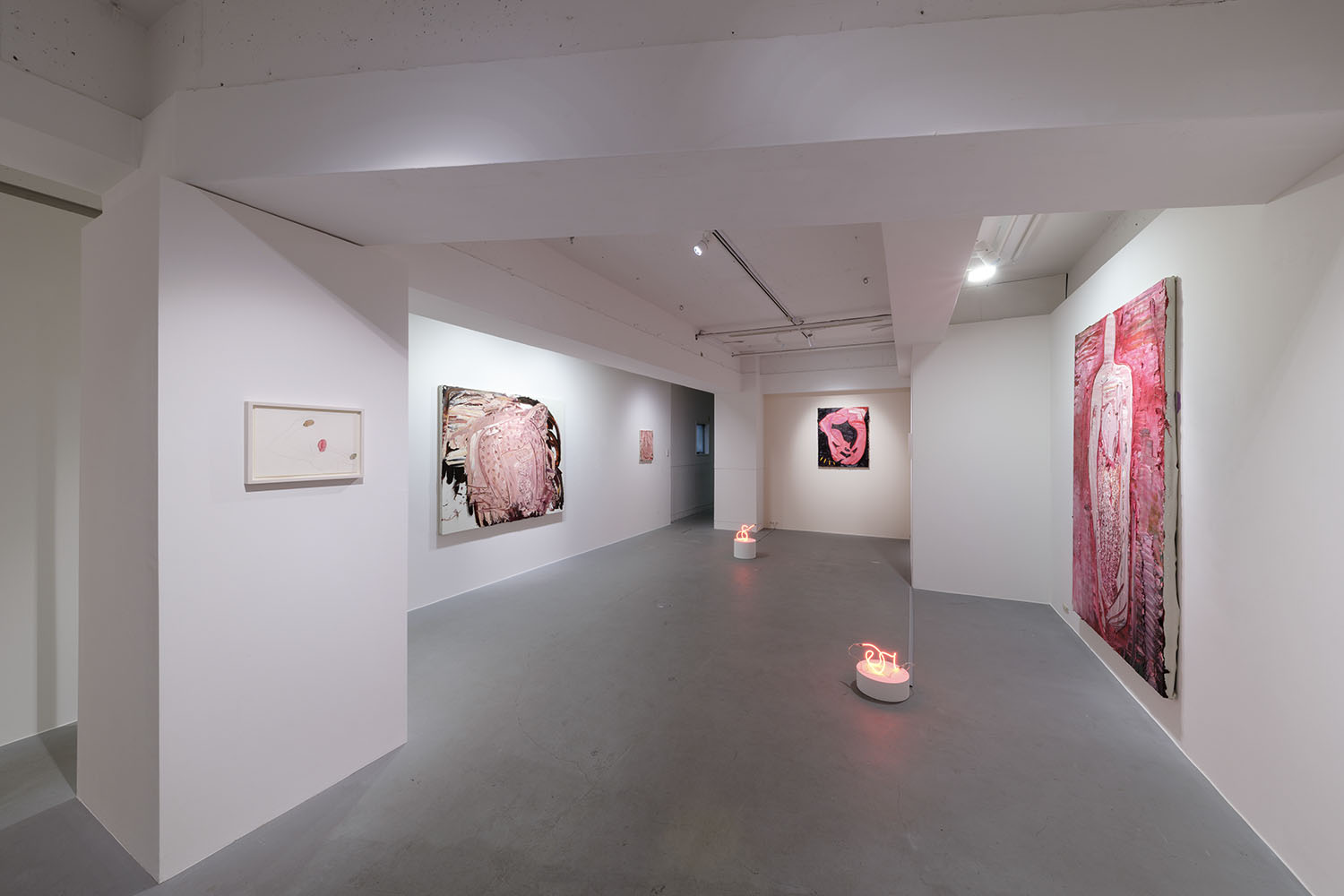
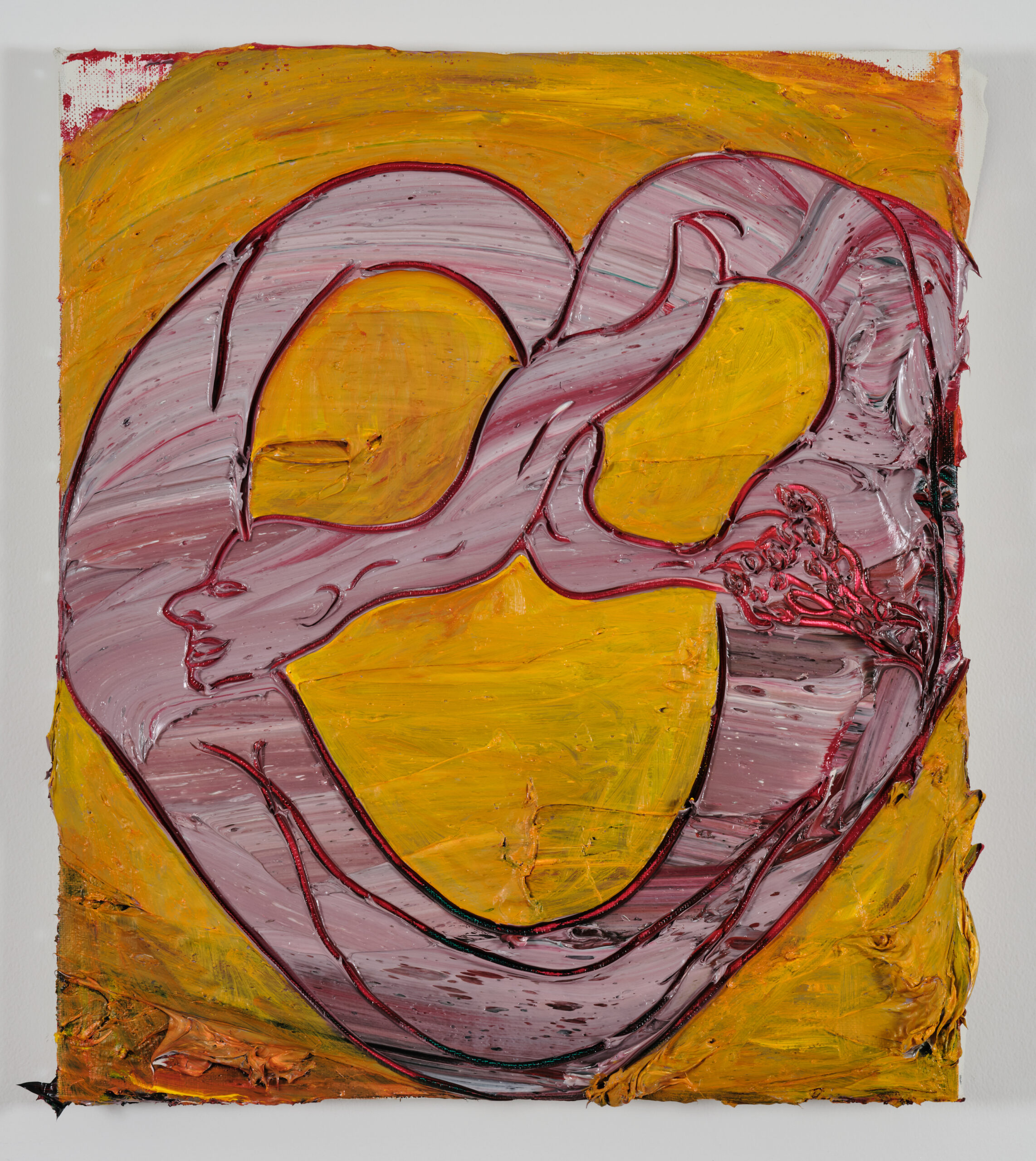
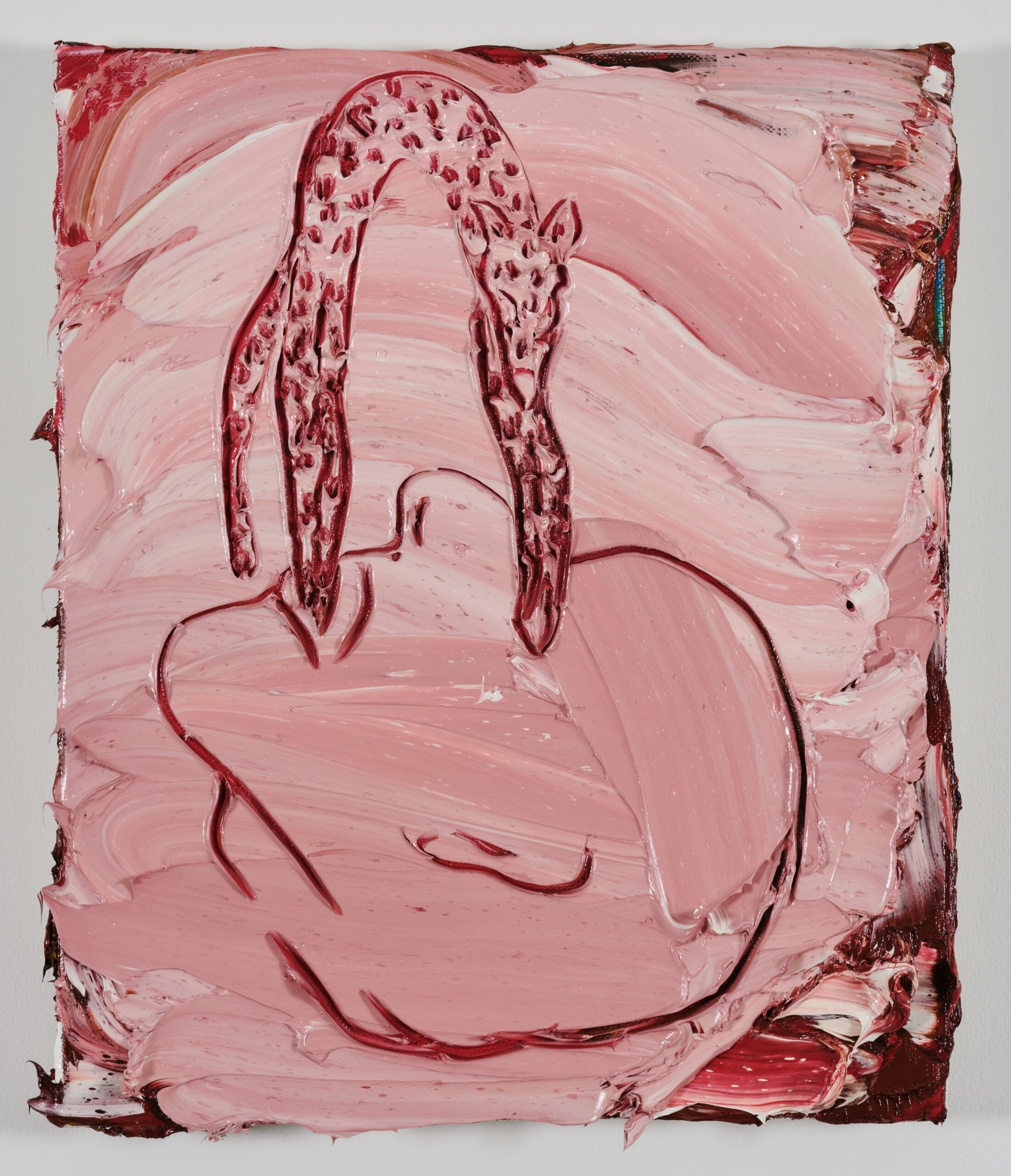
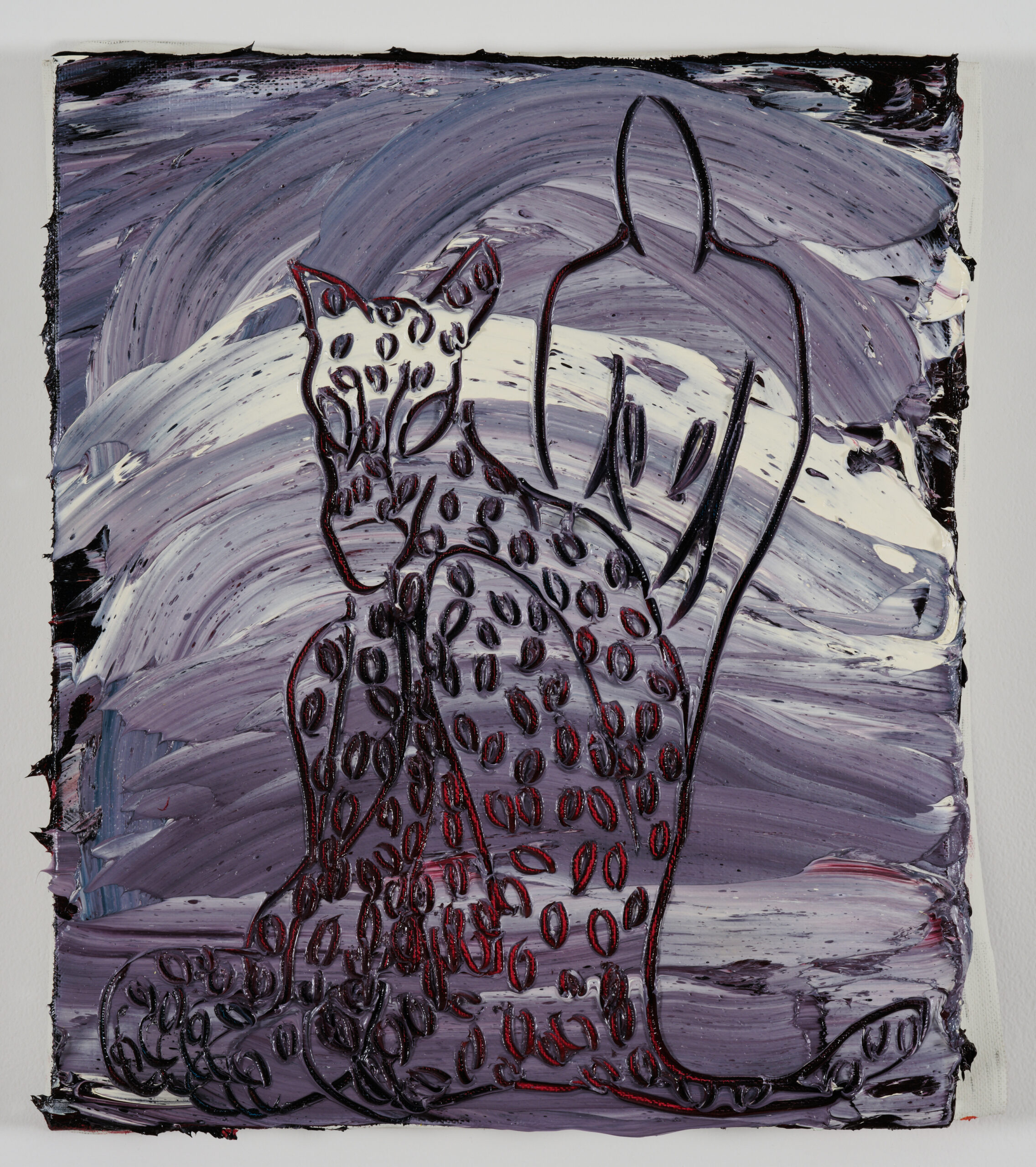
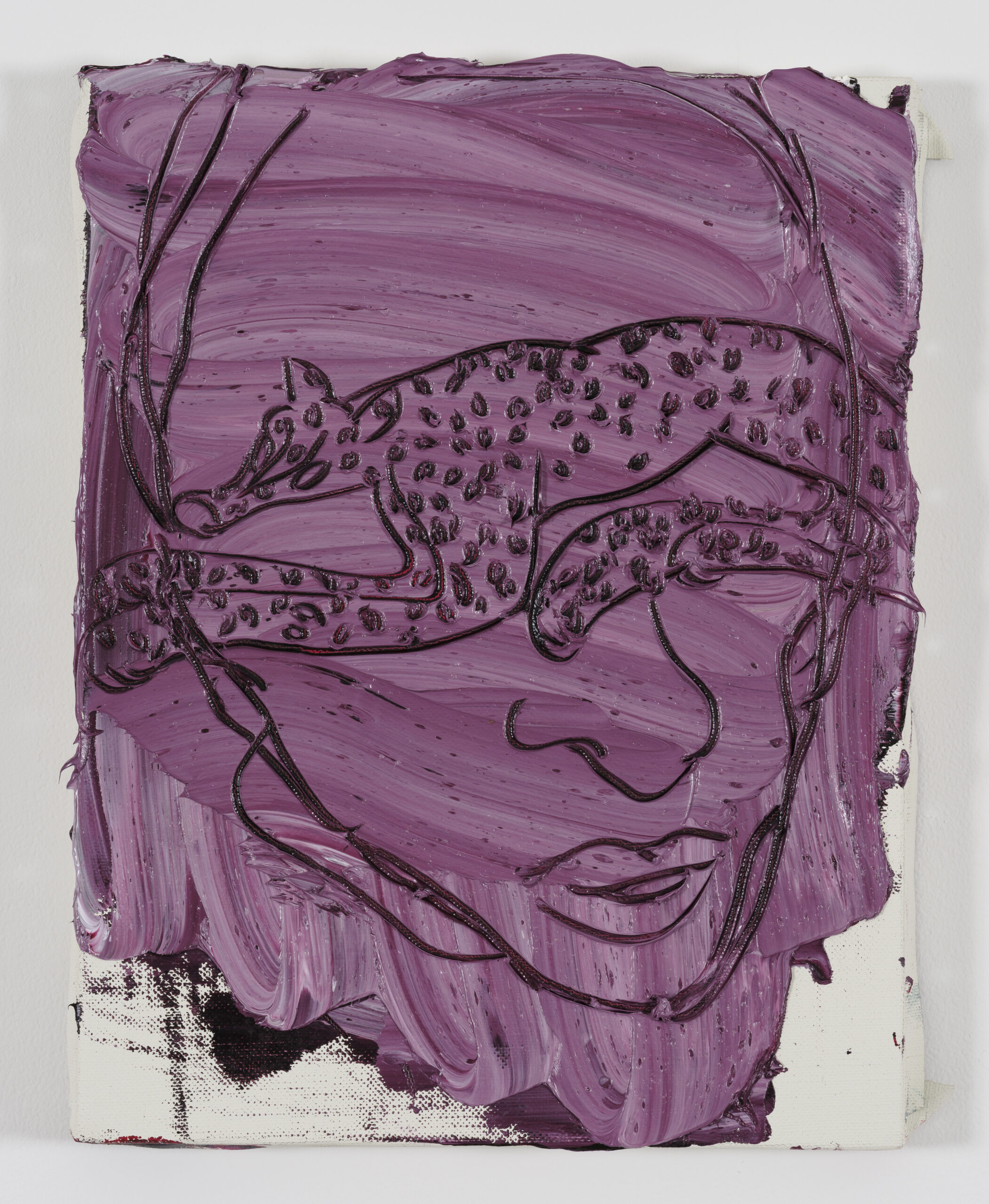
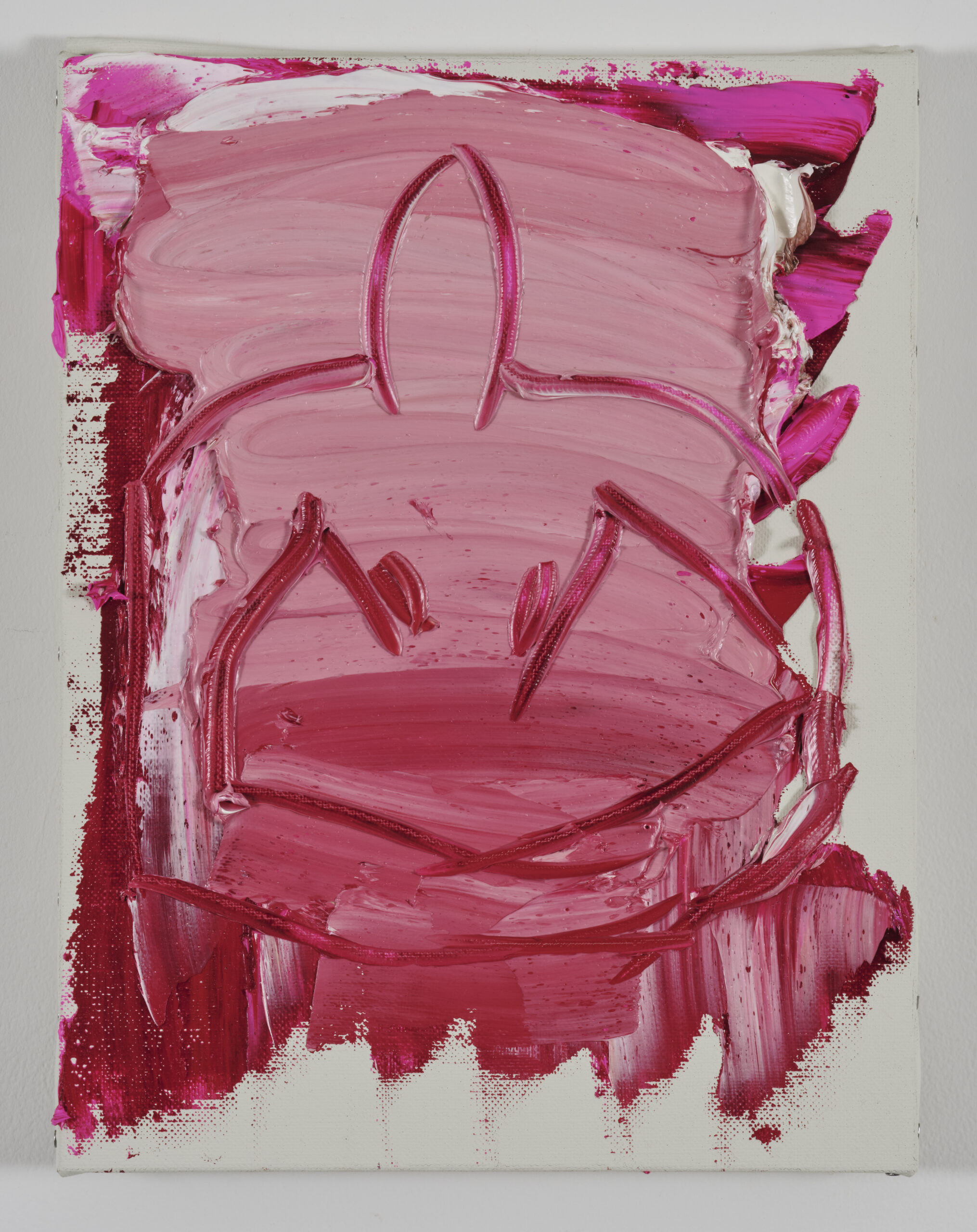
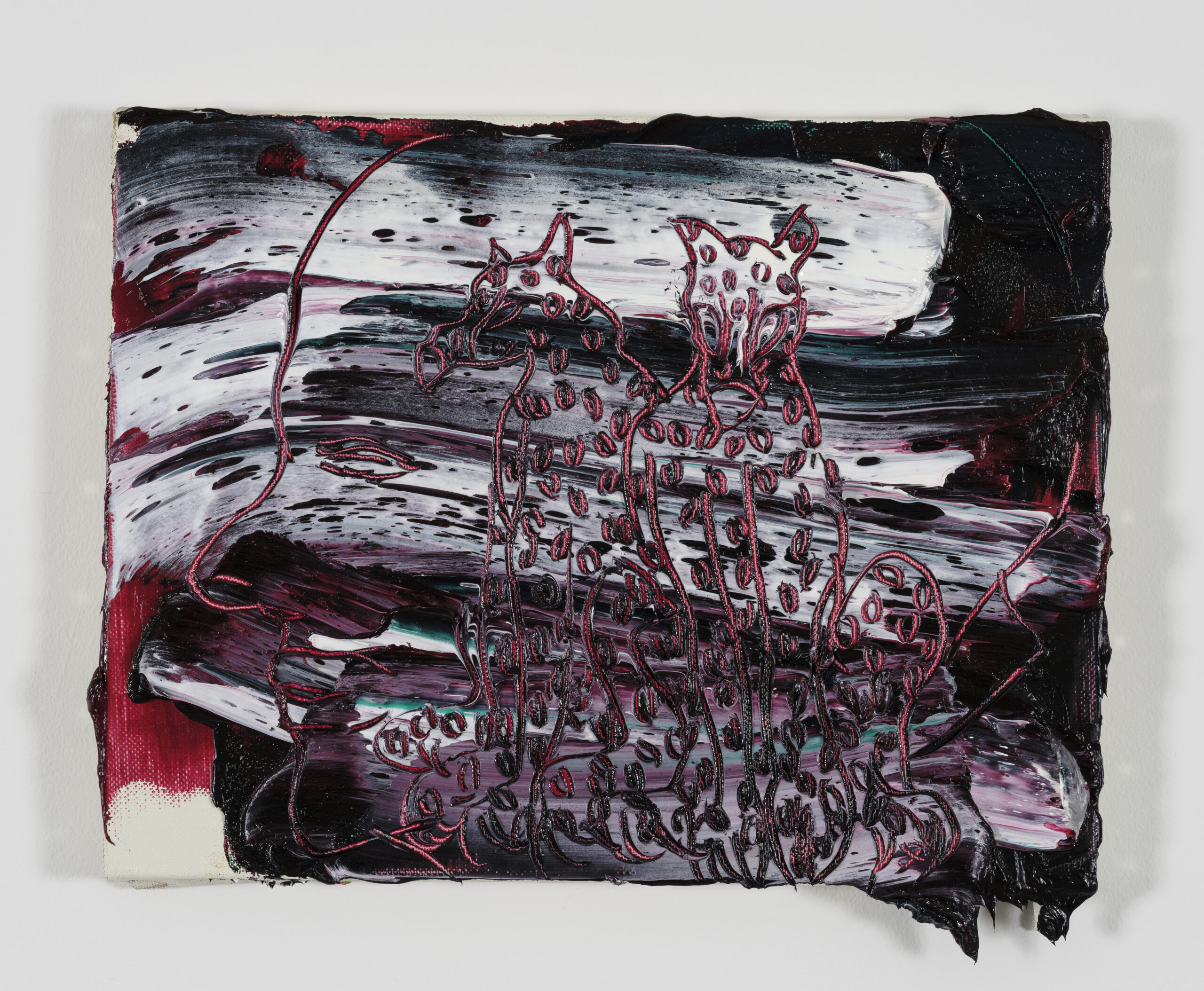
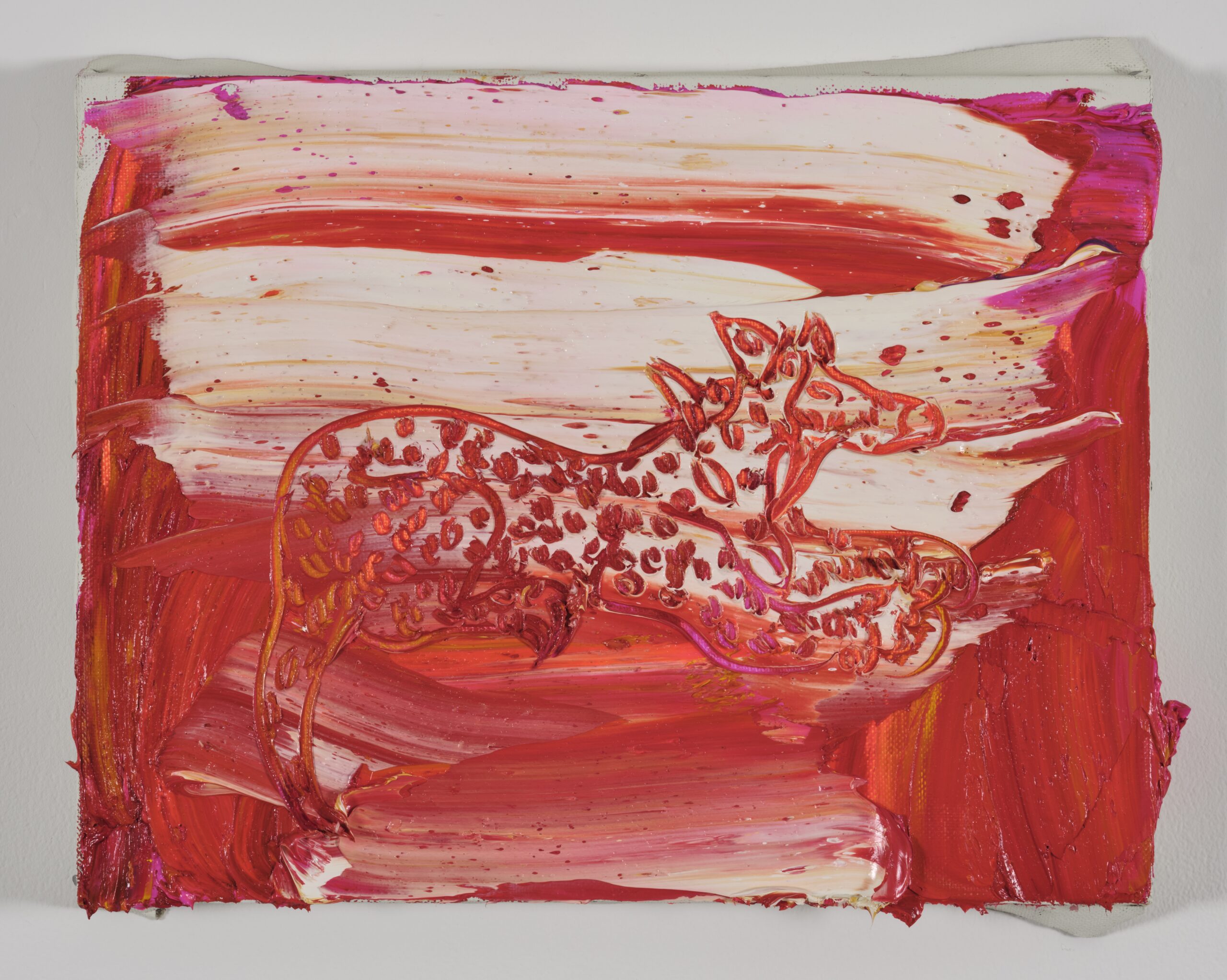


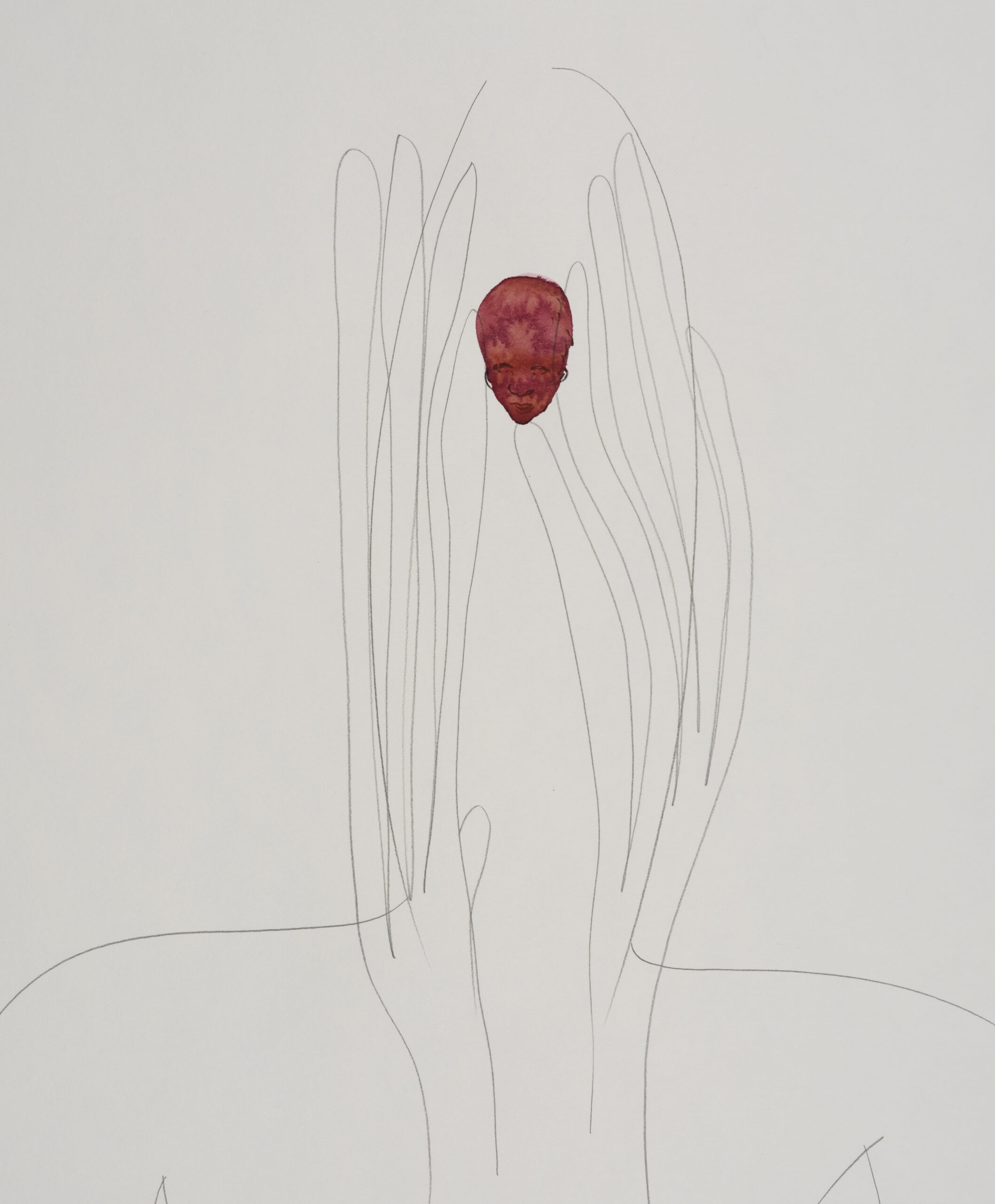
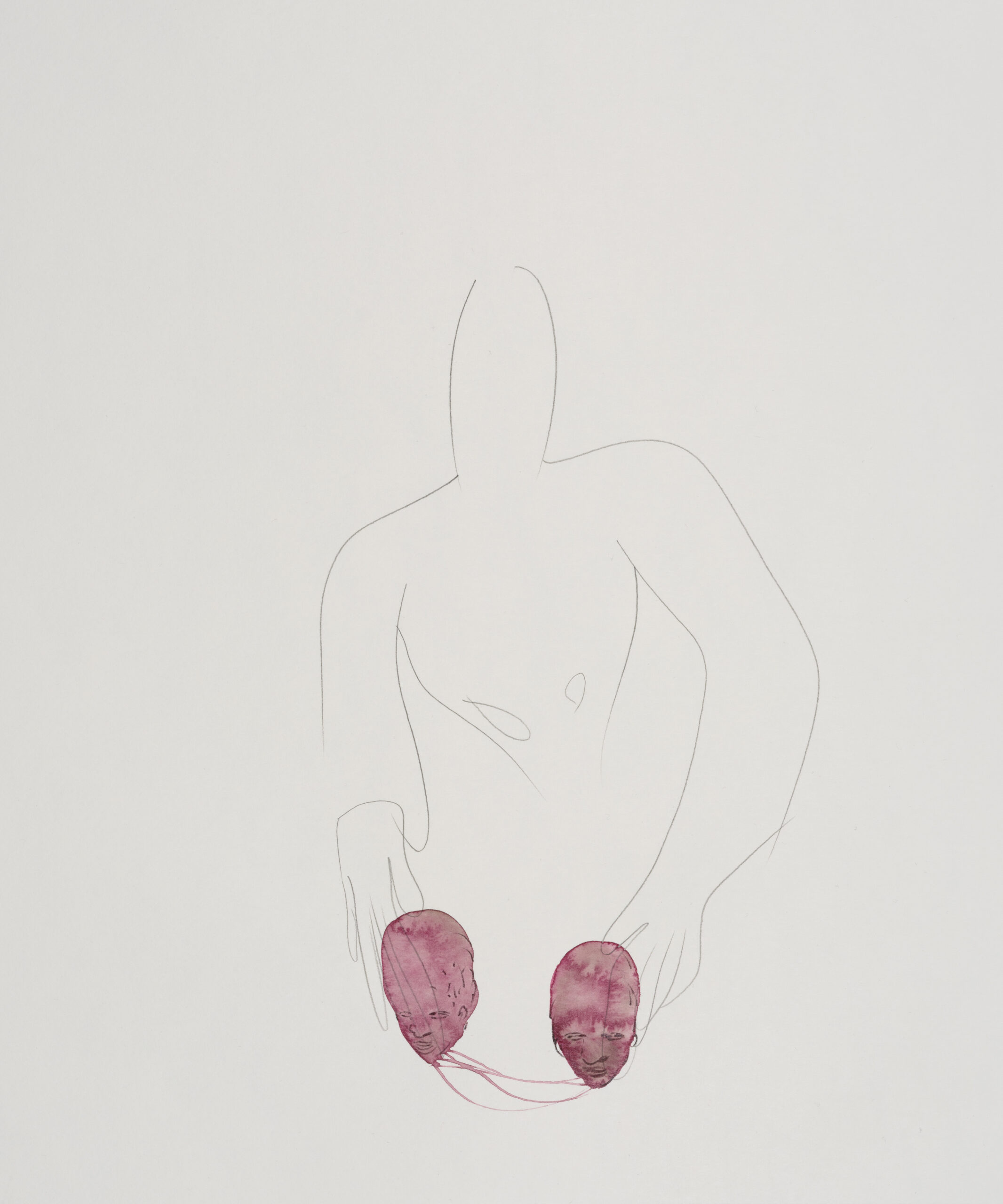
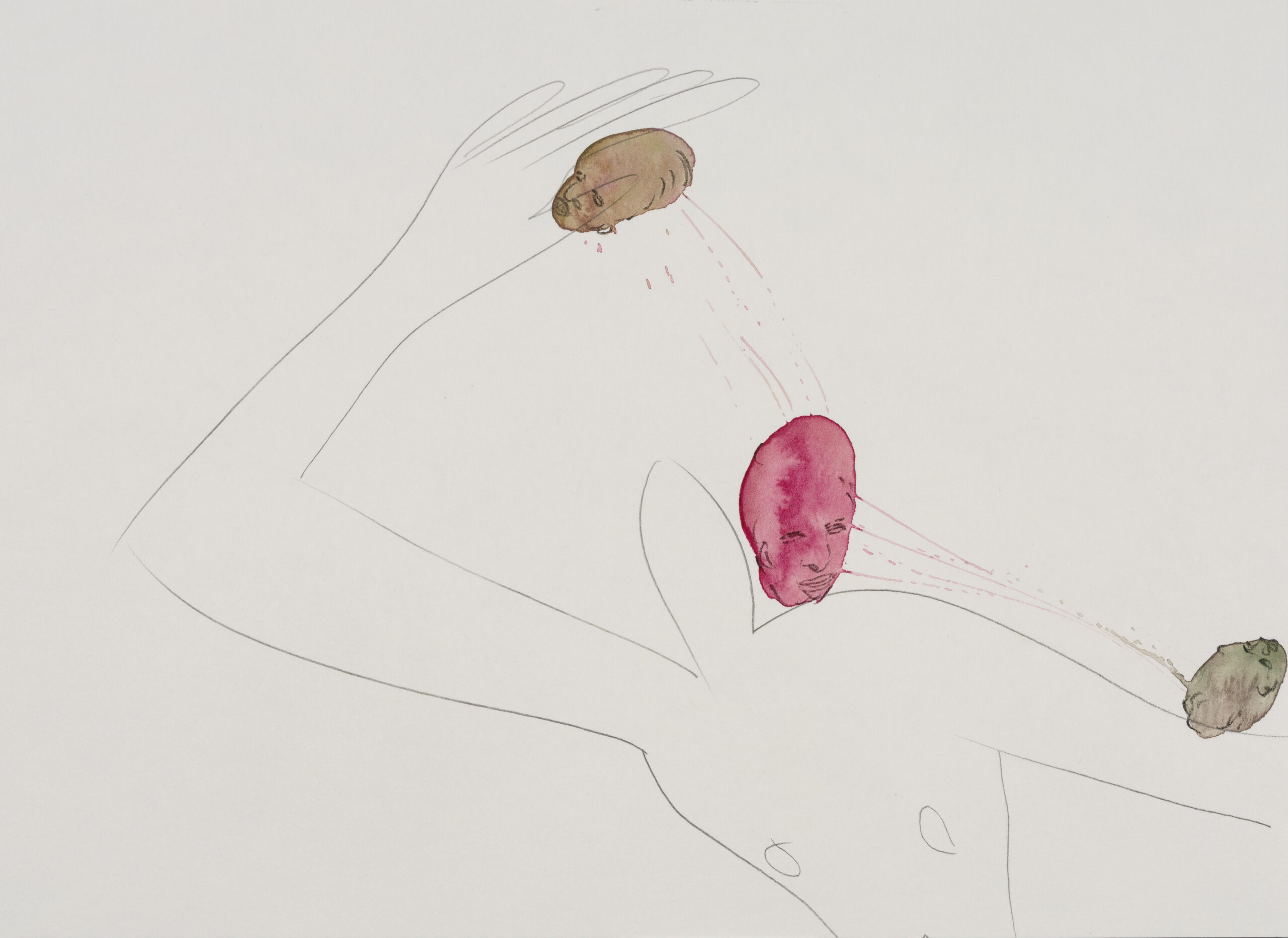
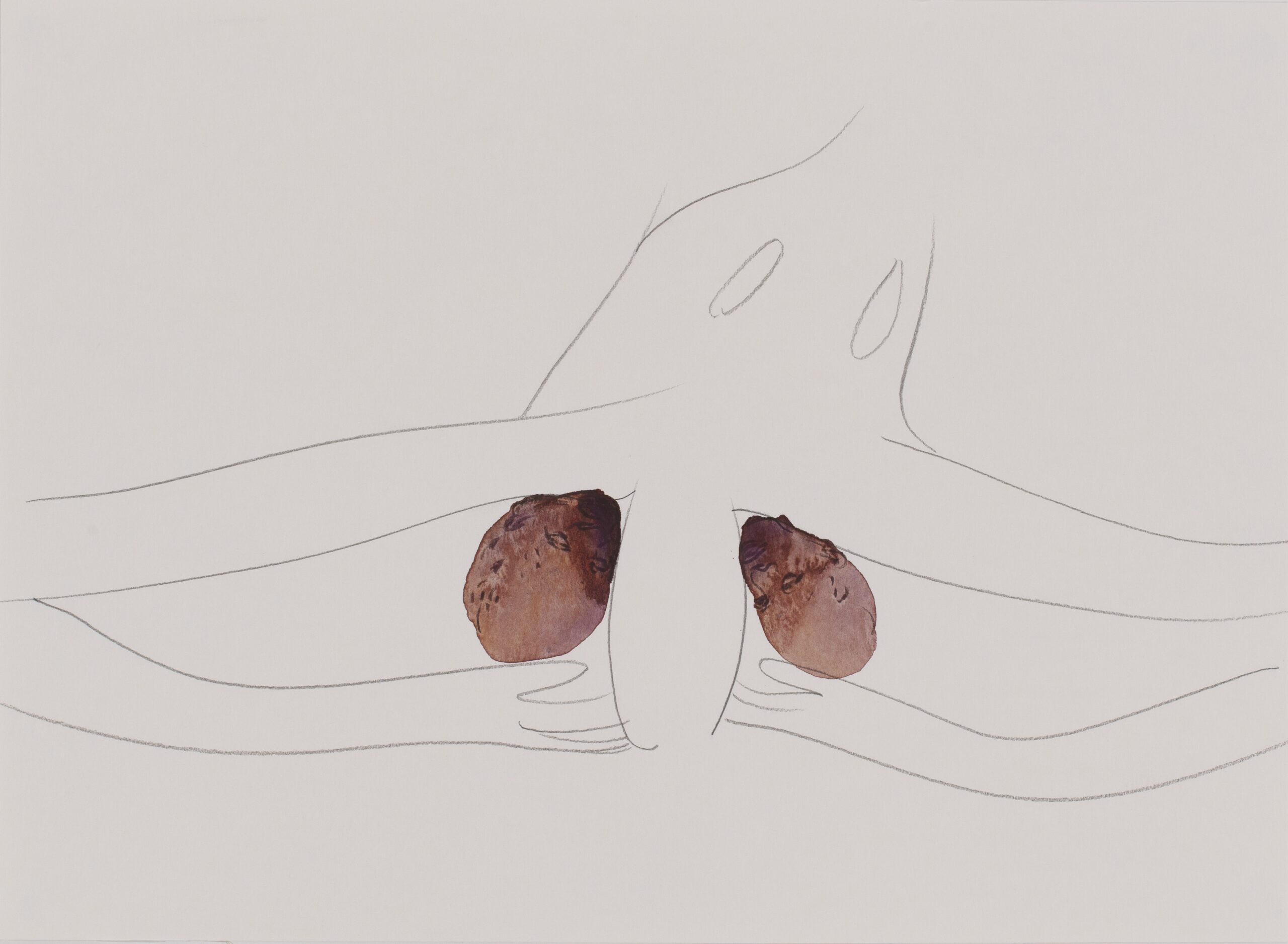

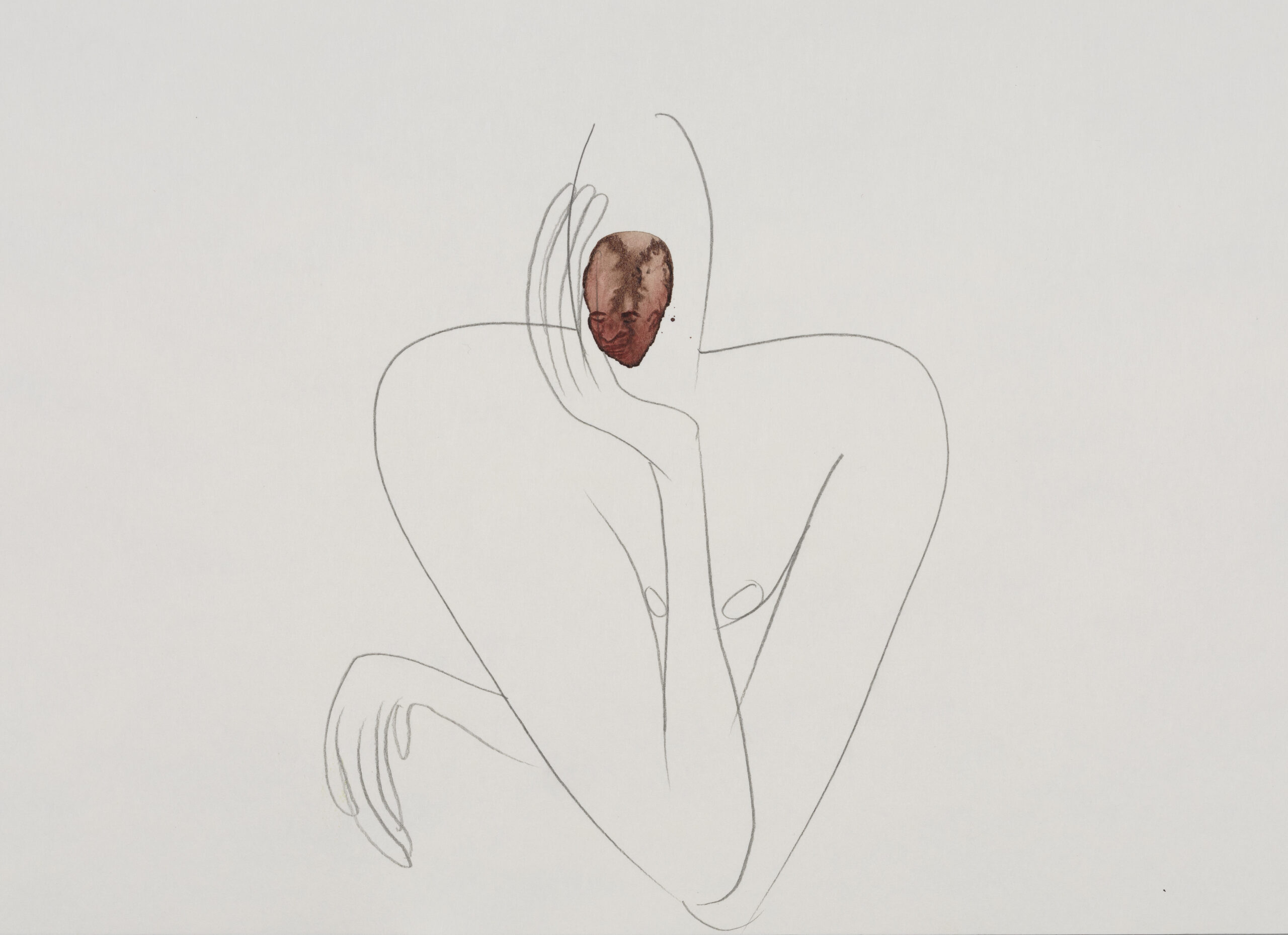
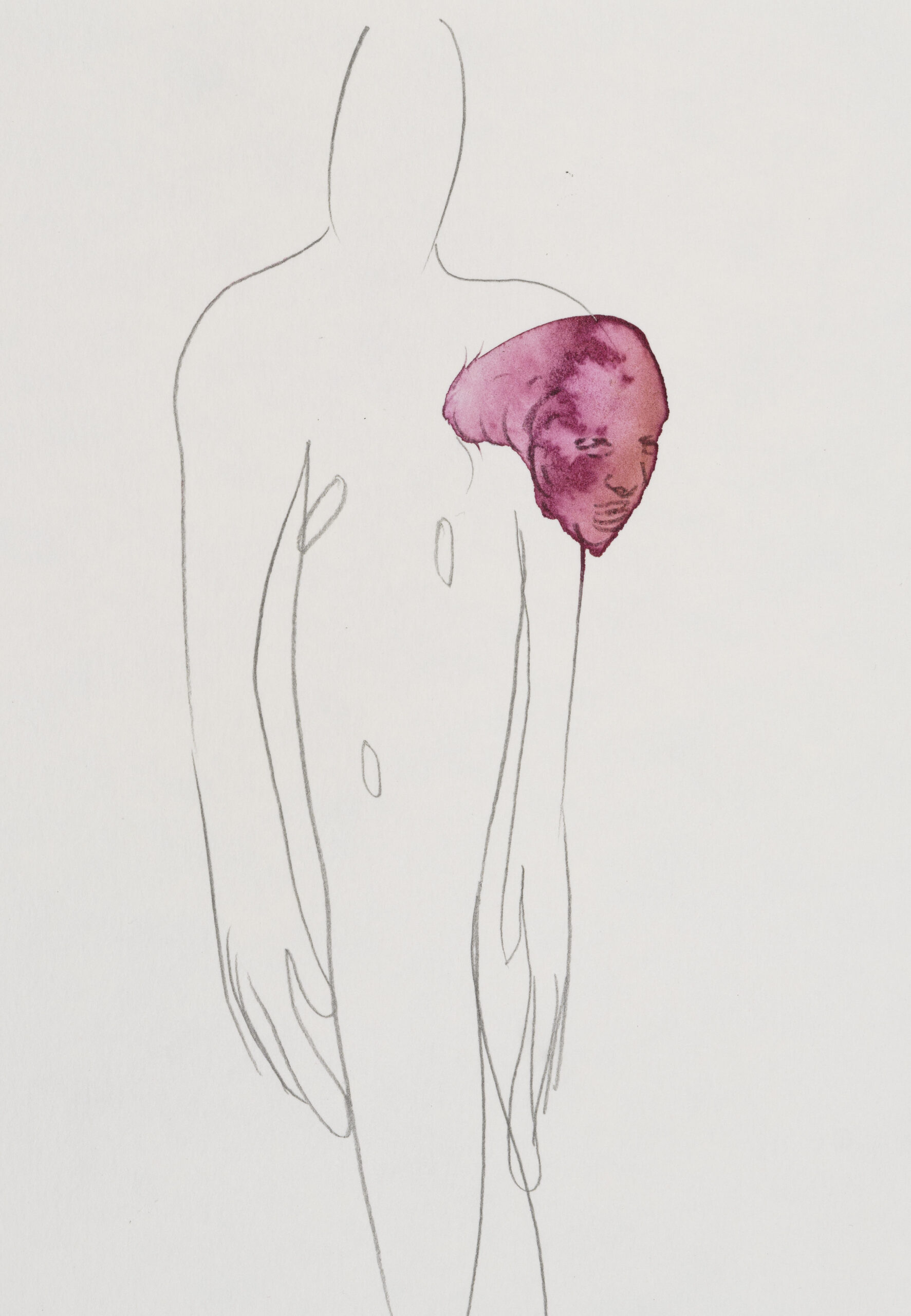
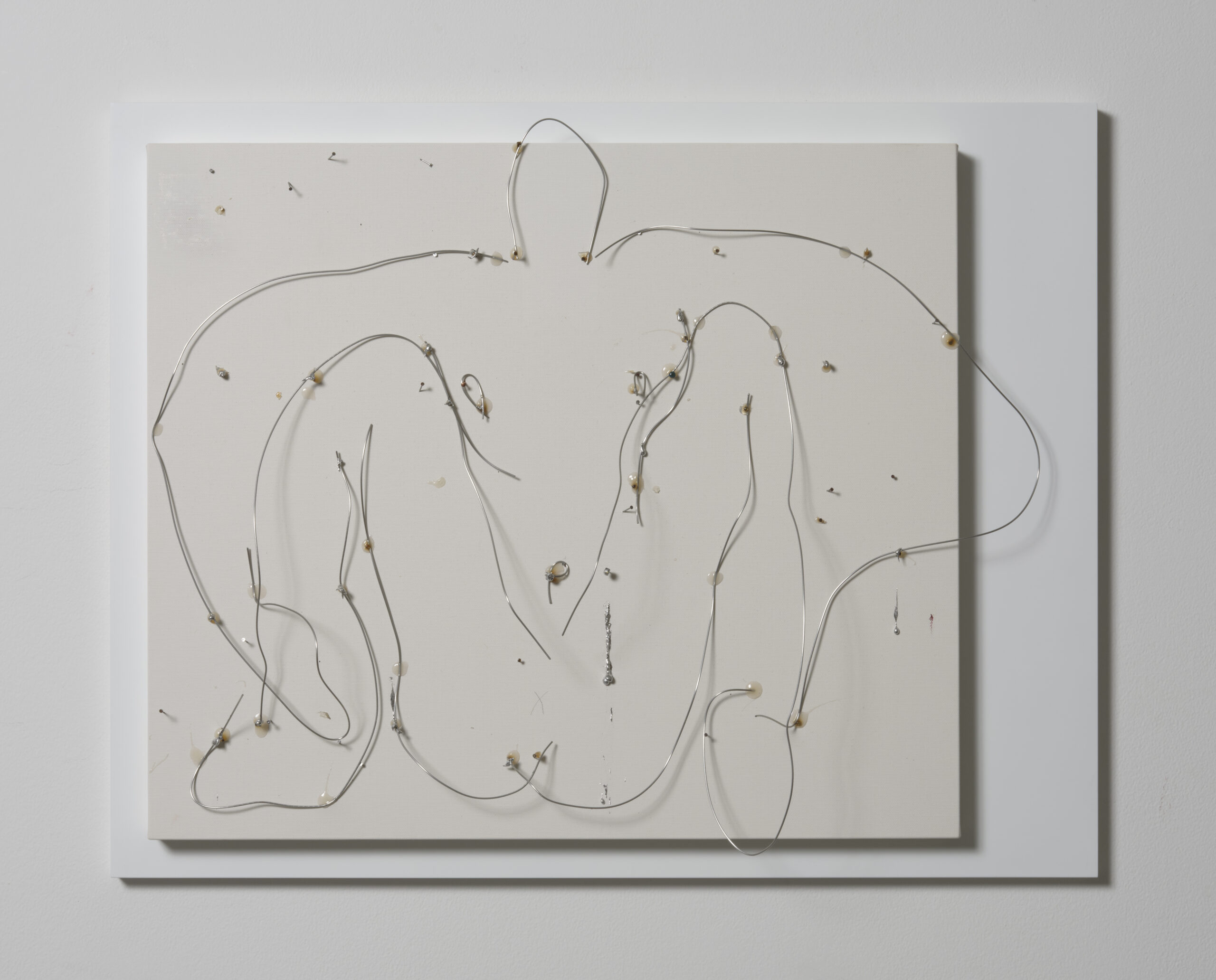
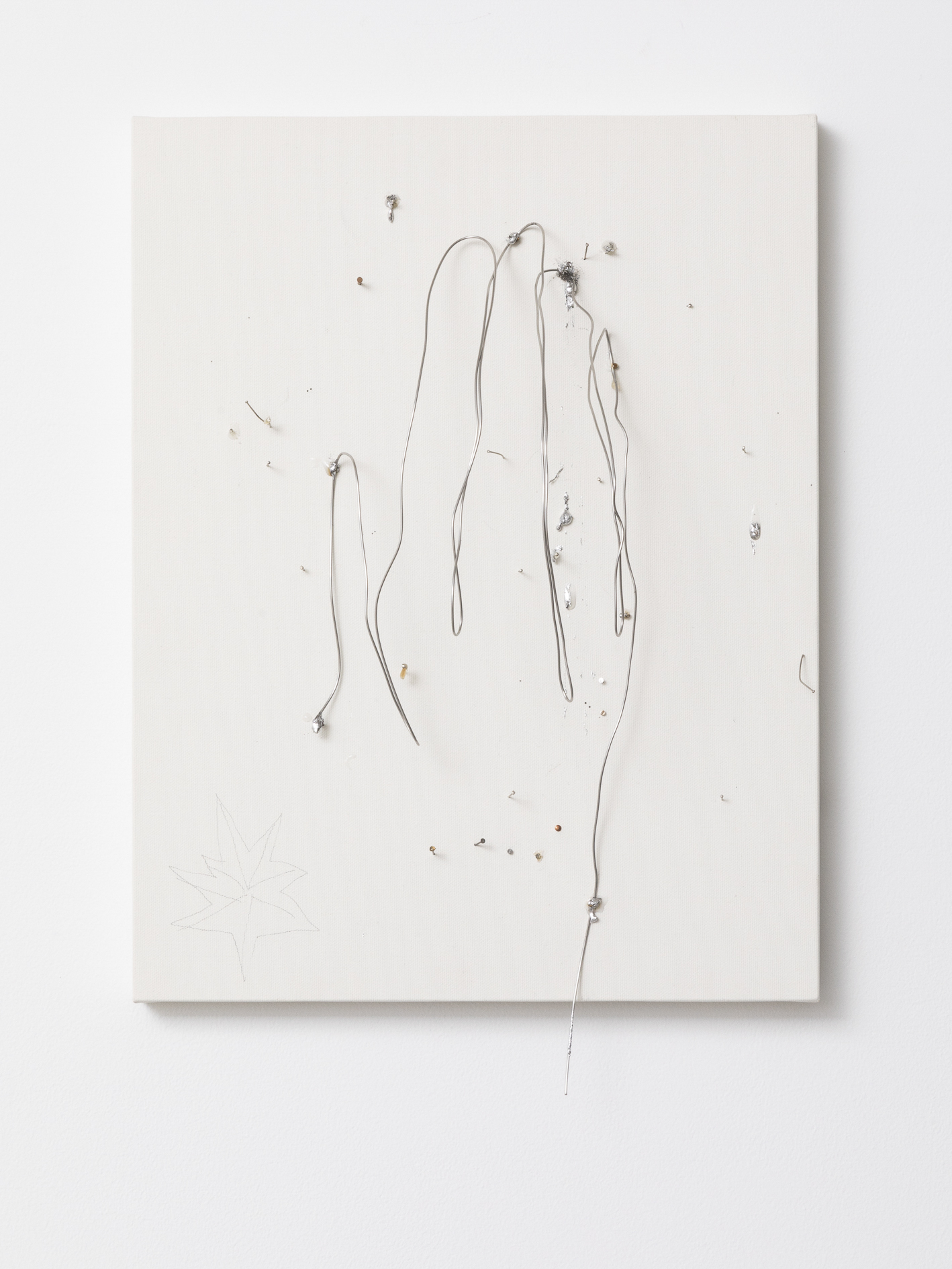
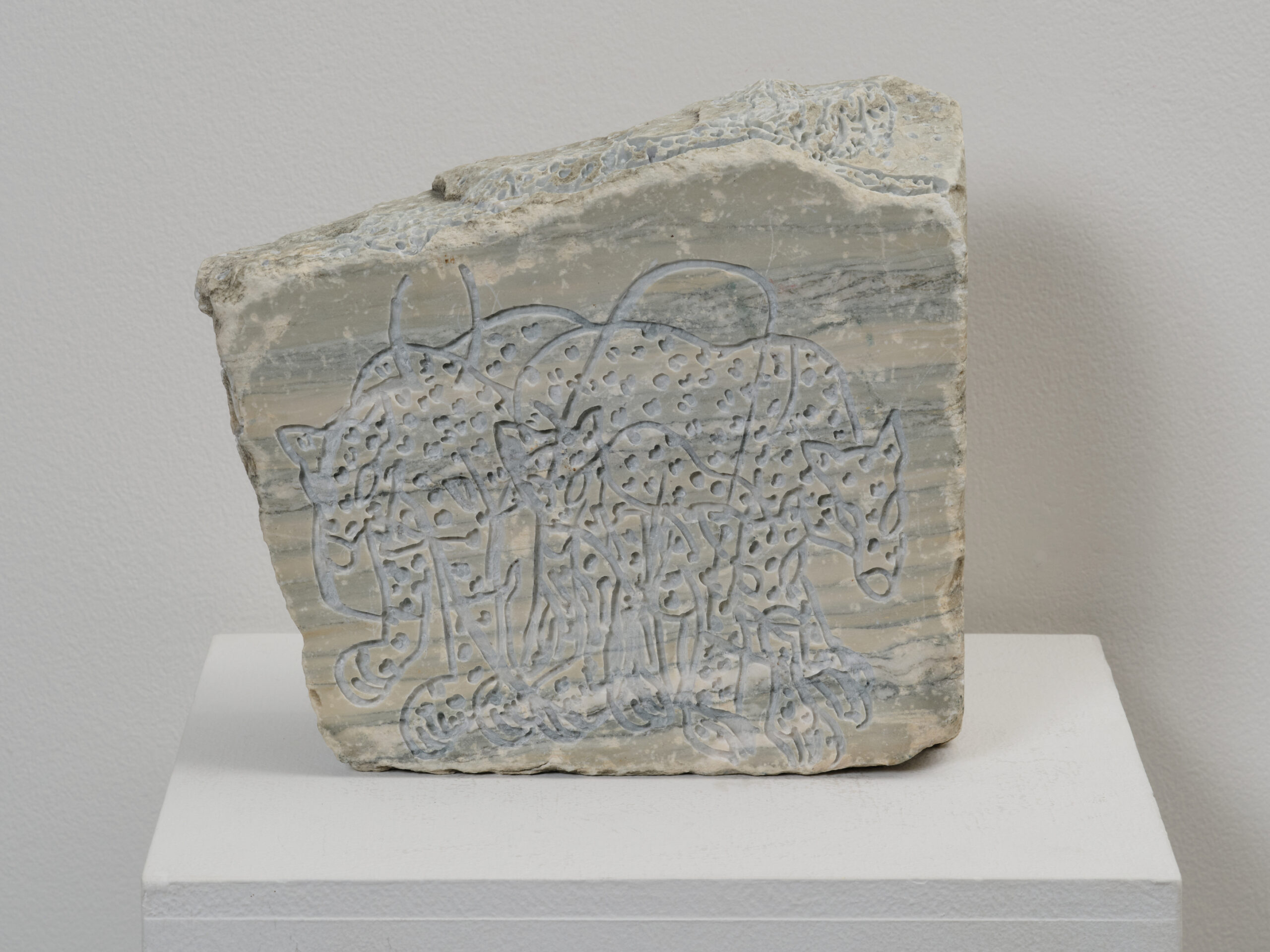
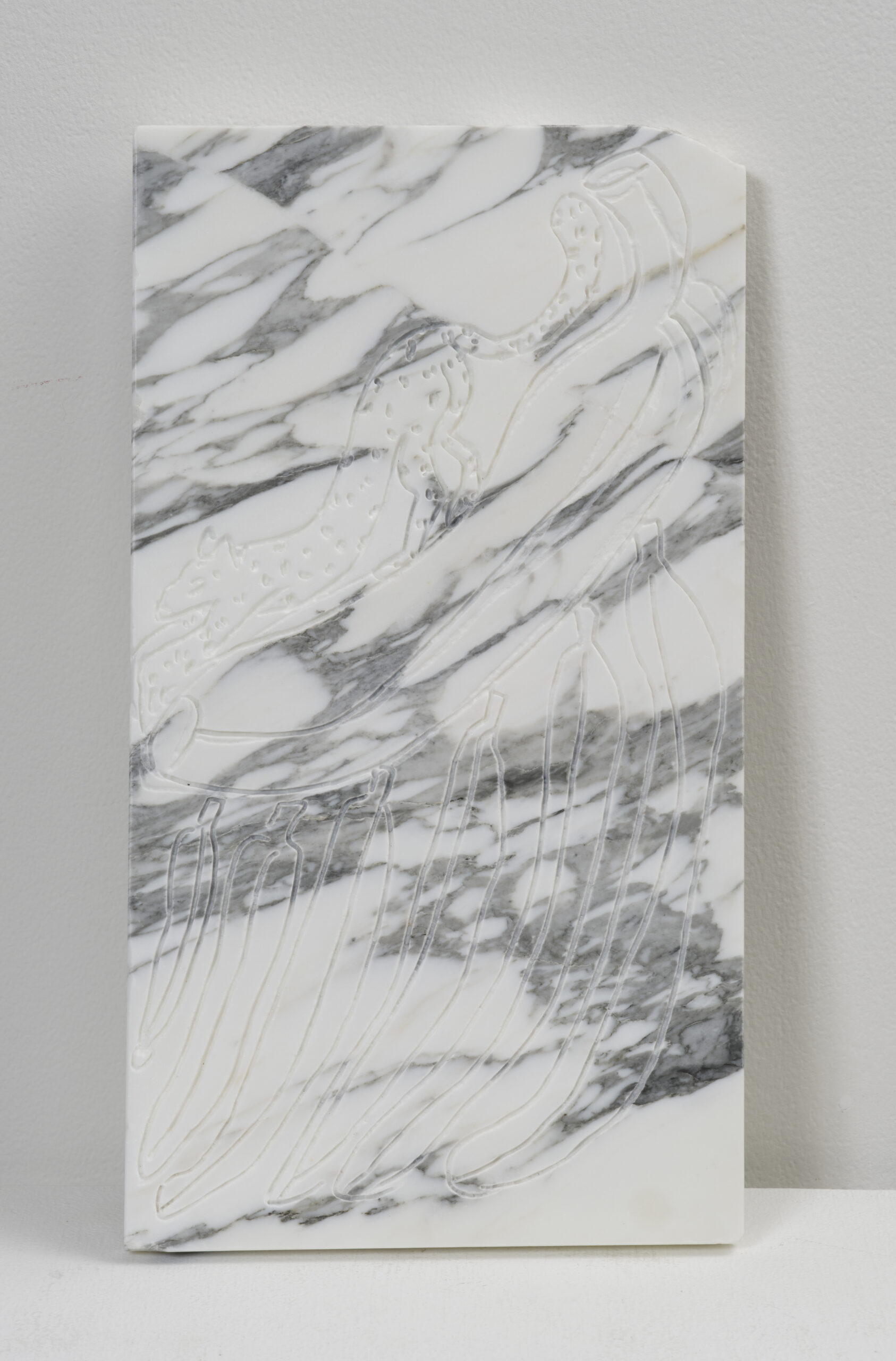
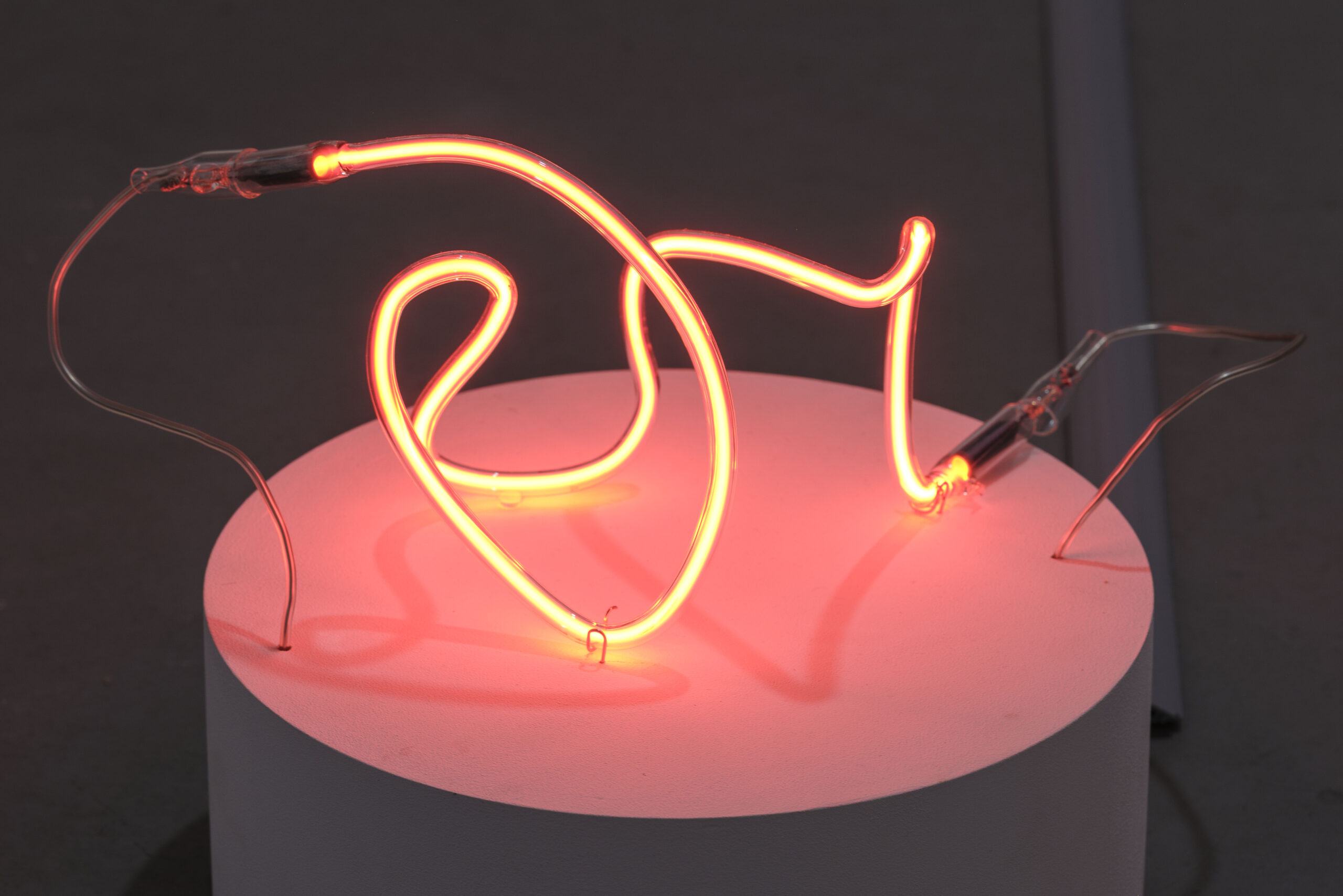
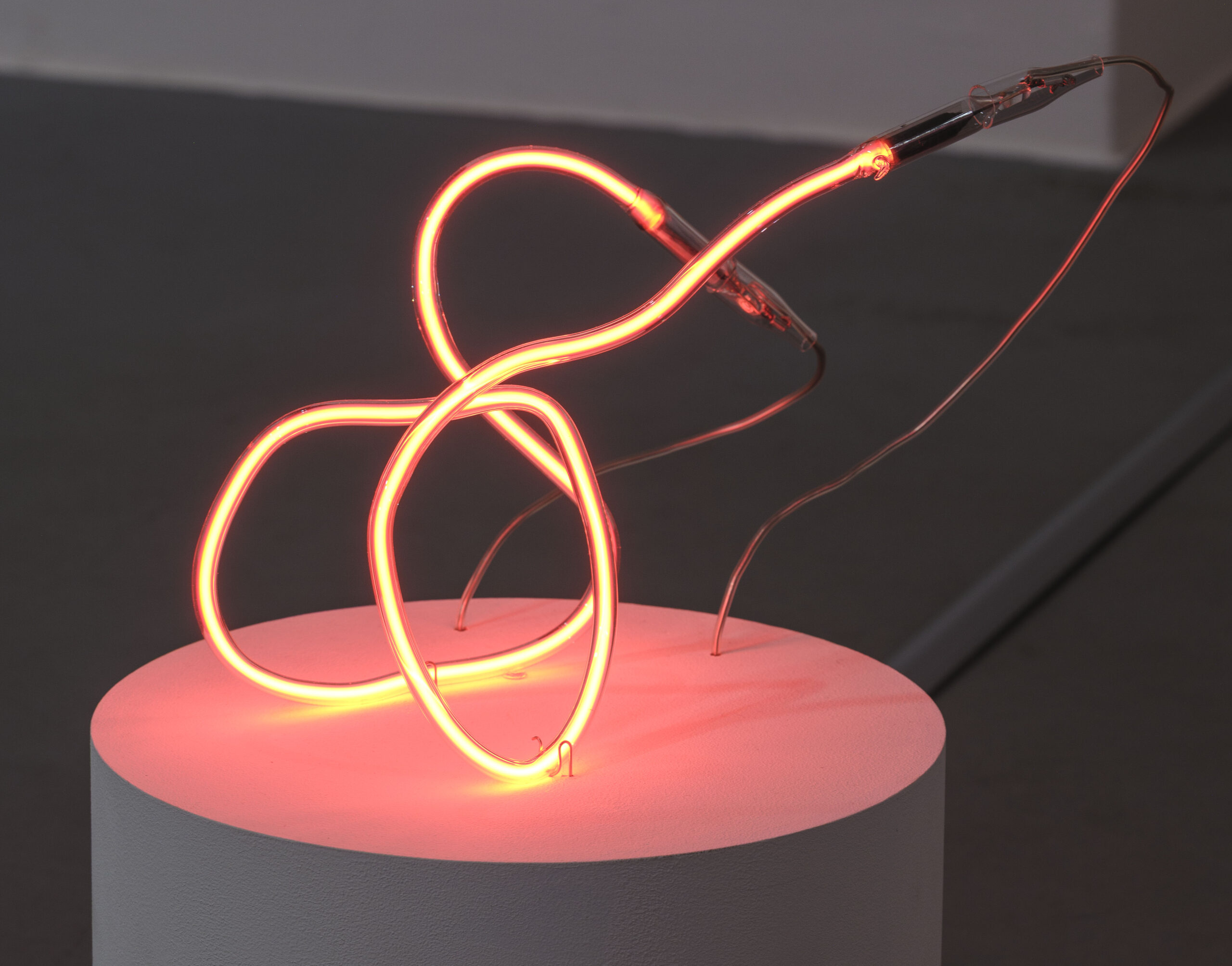
WAITINGROOM (Tokyo) is pleased to present Humans and Tigers, a solo exhibition by Rikako Kawauchi, on view from Wednesday, November 5 through Sunday, December 21, 2025. This exhibition is part of Art Week Tokyo 2025. Kawauchi has long explored the body through an interest in food and the acts associated with eating. Her inquiry extends to binary oppositions such as body and mind, self and other, and further draws inspiration from South American and African myths that can be seen as metaphors for these dualities. Working across a wide range of media—including painting, drawing, neon, wire, and marble—Kawauchi consistently places “line” at the core of her practice. Lines vividly reveal both physicality and spirituality, capturing the body’s movements and emotions with a sense of immediacy and speed in her brushwork. For this exhibition, Kawauchi focuses in particular on the duality between animals (tigers) and humans, presenting a body of new works that investigate this relationship.
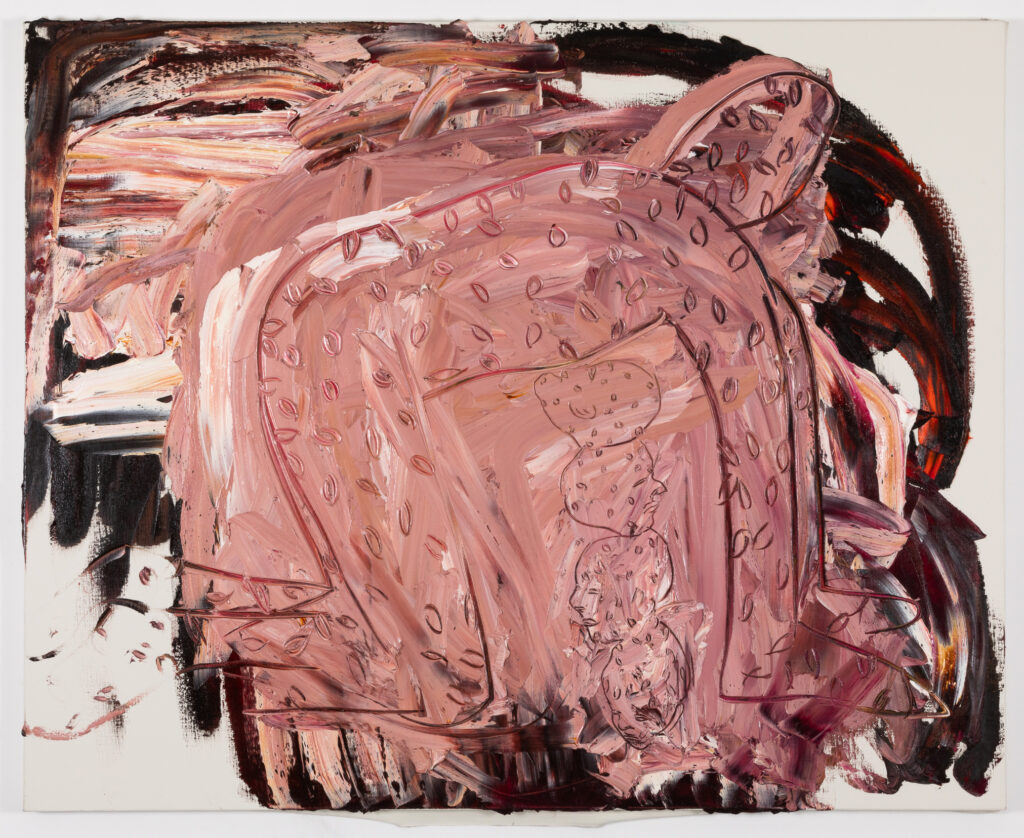
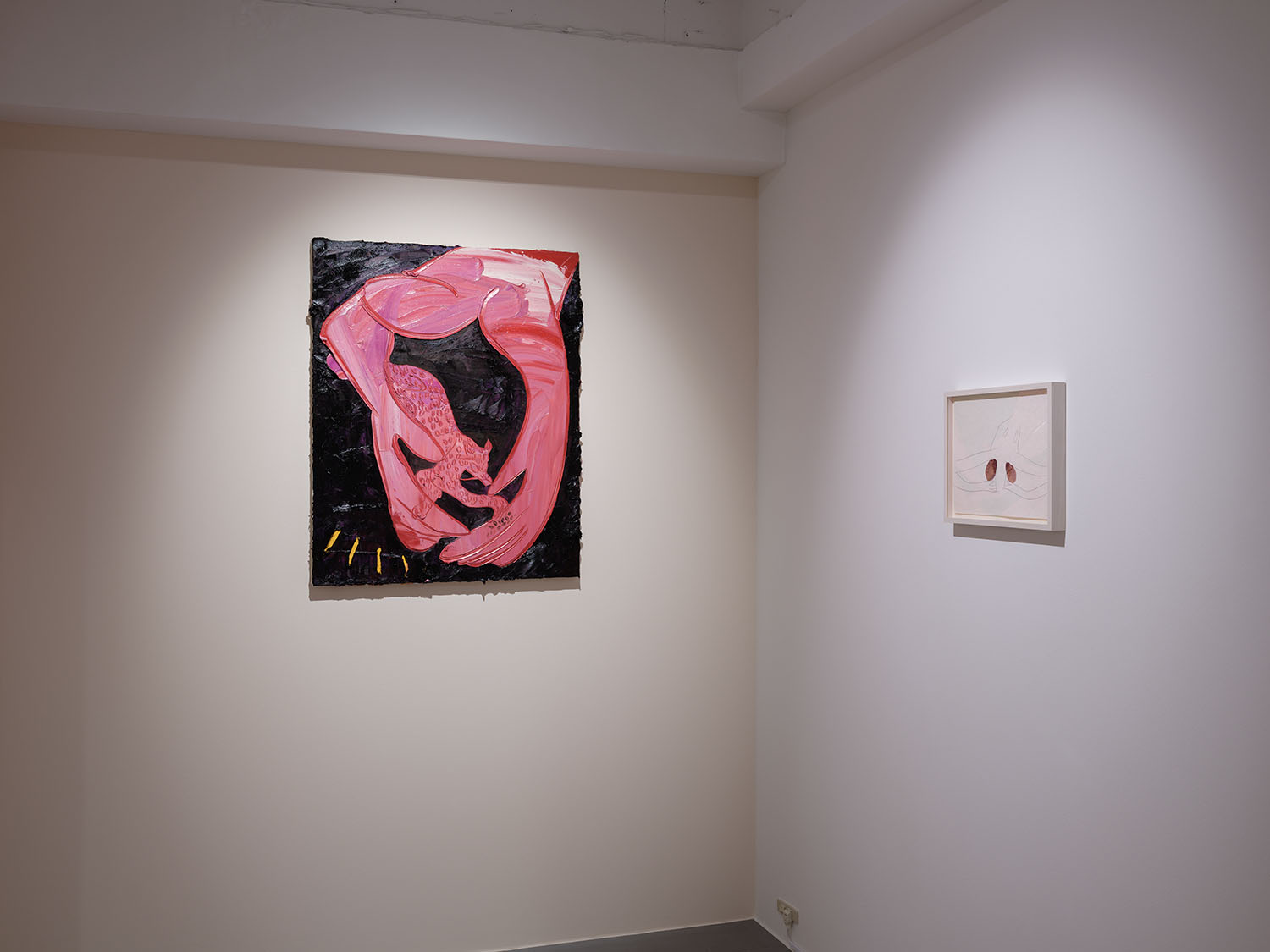
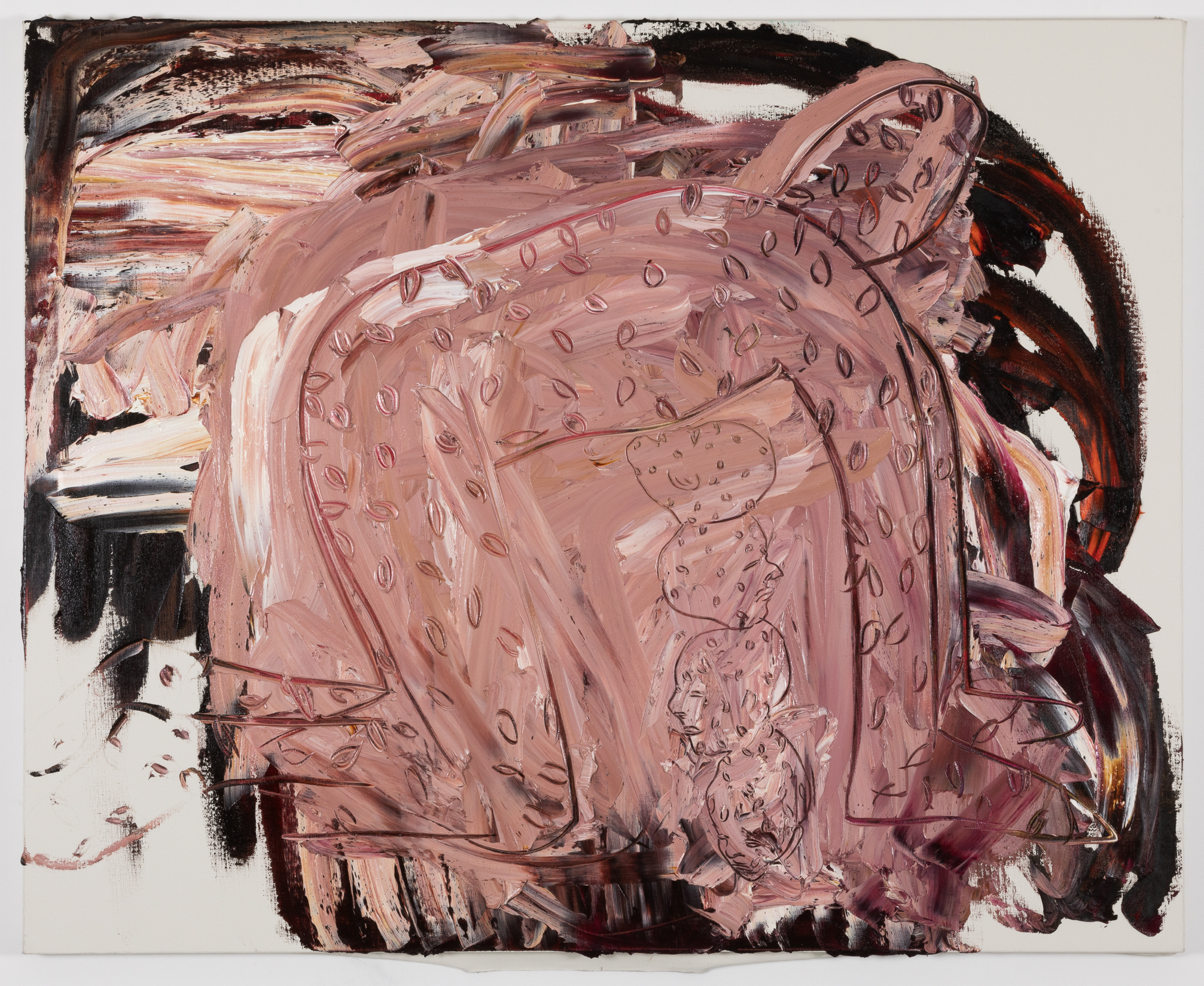
Time to feed the milk, time to become a tiger, 2023, oil on canvas, 1303 × 1620 mm
Born in Tokyo in 1990, Rikako Kawauchi completed her M.F.A. in Oil Painting at the Graduate School of Art, Tama Art University in 2017. She is currently based in Tokyo.
Based on her interest in food, Kawauchi explores the ambiguities in the interrelationship between body and mind, and between self and other. She takes as motifs the presence and absence of the self and others that emerge in various forms of communication such as eating, conversation, and sex. Her practice spans a wide range of media—including drawing, painting, wire, resin, neon, and marble—while consistently placing “line” at the core of expression. Through her practice, she describes her attempt as “capturing elusive bodies and invisible movements of thought within lines.”
Recent major exhibitions include the solo exhibition The shape of water hardens into stone. (2025, Kurobe City Art Museum, Toyama), Inner Vector: 11, 72, 2154 (2025, Beyond Gallery, Taipei), the group exhibition 5th Anniversary Exhibition Plastic Utopia: Our New Ecosystem (2025, Hirosaki Museum of Contemporary Art, Aomori), the solo exhibition Paintings & Drawings – Food, Animals, Organs, Plants, Bodies, etc, everything outside me is everywhere in the air, I breathe them in, I breathe them out. (2024, Van der Grinten Galerie, Cologne), Under the sun (2024, agnès b. Galerie Boutique, Tokyo), the group exhibition A Personal View of Japanese Contemporary Art: Takahashi Ryutaro Collection (2024, Museum of Contemporary Art Tokyo), the solo exhibition Even the pigments in paints were once stones (2023, WAITINGROOM, Tokyo), The Voice of the Soul (2023, ERA GALLERY, Milan), the group exhibitions Body, Love, Gender (2023, Gana Art Center, Seoul), WORLDS IN BALANCE: ART IN JAPAN FROM THE POSTWAR TO THE PRESENT (2023, Okura Museum of Art, Tokyo), and 10th Anniversary Exhibition: New Horizon—From History to the Future (2023, Arts Maebashi, Gunma). She also received the Kenjiro Hosaka Prize at the 1st CAF Award (2014), the SHISEIDO ART EGG Prize at SHISEIDO ART EGG (2015), the Yuki Terase Prize at the TERRADA ART AWARD 2021, and the Grand Prize (VOCA Prize) at VOCA 2022: The Vision of Contemporary Art—New Perspectives in Painting (2022).
In the myths of South America and Africa, the tiger appears in stories as the metaphor with the greatest significance.
Within these myths, the tiger is described as representing the food that constitutes the body, the fire used in cooking that makes that food edible, or the sole possessor of that fire.
Lévi-Strauss argued that at the heart of every myth in South America and Africa lies the cooking fire, or the body. His analysis is that the origin of all human cultures can be traced to the cooking fire.
For humans, the tiger is a force as formidable as the natural threats that endanger life. If humans can be said to embody what is cultural, then the tiger represents the instinctual, that which belongs to nature.
In myths, however, it is the tiger that holds the cooking fire that leads to culture, bestowing it upon humans, or even marrying human women. Myths also describe women who marry tigers and gradually transform into tigers themselves, or conversely, tigers that behave and converse just as humans do.
Here, the tiger can be read as encompassing not only animalistic and instinctual aspects, but also certain cultural elements. The fact that humans are also depicted as approaching the tiger, imbued with instinct, suggests that both can be understood as symbiotic and interchangeable entities.
This holds true not only in myths, but also for us who inhabit the real world.
Beneath the clothes we wear and the human lives that appear to be underwritten by cultural considerations, the raw flame of instinct continues to burn.
Where does the wisdom of animals come from? Is it something etched into their bodily memory, or do they also observe their surroundings, think, and thereby extract a kind of wisdom in order to survive? (Surely they do.)
Or perhaps within instinct, within the body itself, there exists a form of wisdom and thinking that cannot be verbalized.
We often conceive of humans and animals as separate entities, but just as with the duality of body and mind, the fundamental relationship between us is one of coexistence. A tiger slumbers within us — and we can also see humanity within it.
Rikako Kawauchi, October 2025
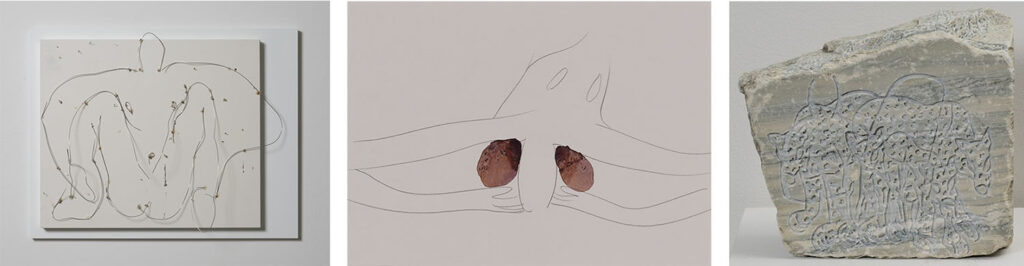
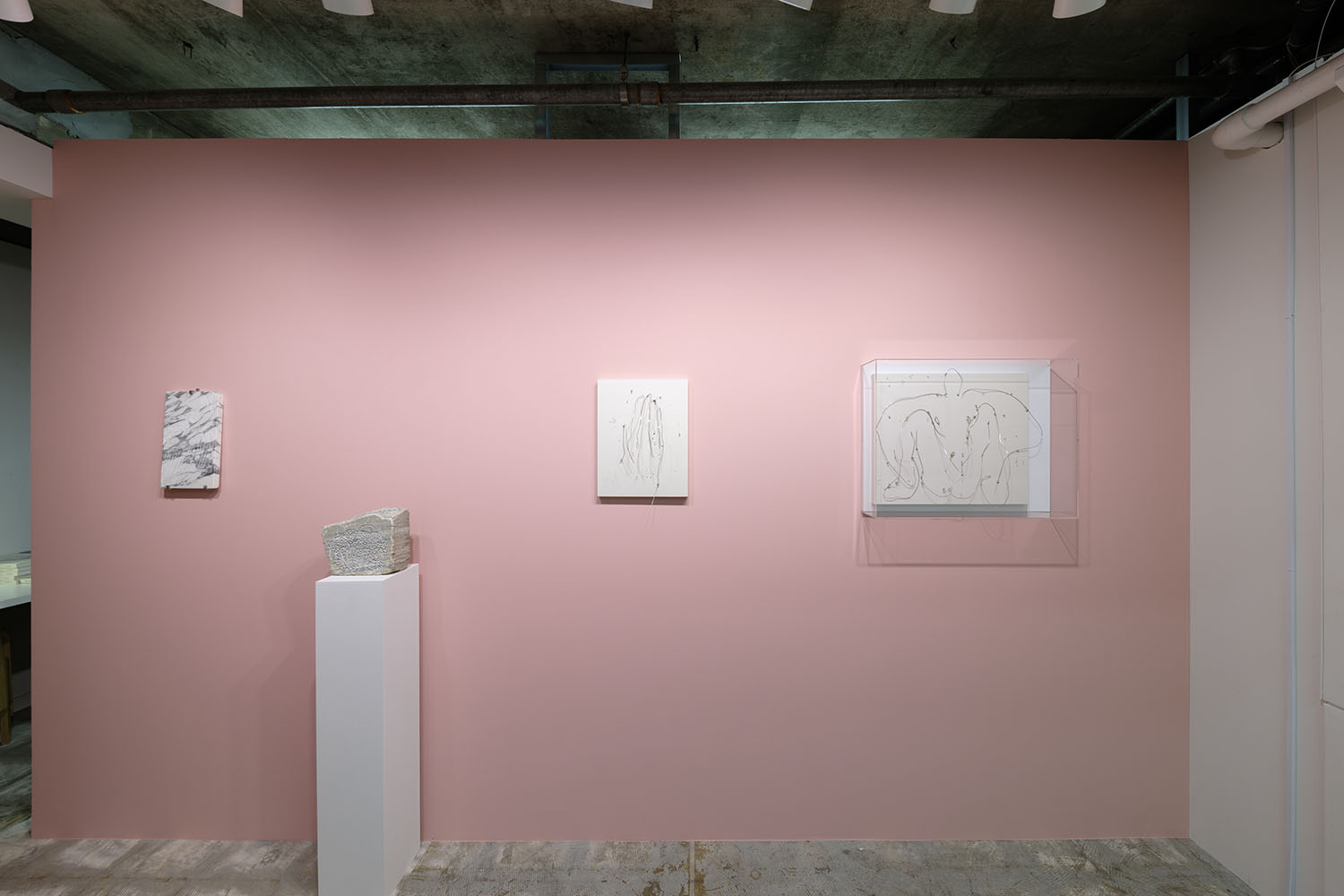
Left: Sitting, 2025, wire and pin on panel, 665 × 525 × 140 mm
Center: reversal, 2025, watercolor and pencil on paper, 240 × 330 mm
Right: Human and tigers, 2025, stone, 90 × 240 × h210 mm
Keisuke Mori (Curator, Chiba City Museum of Art)
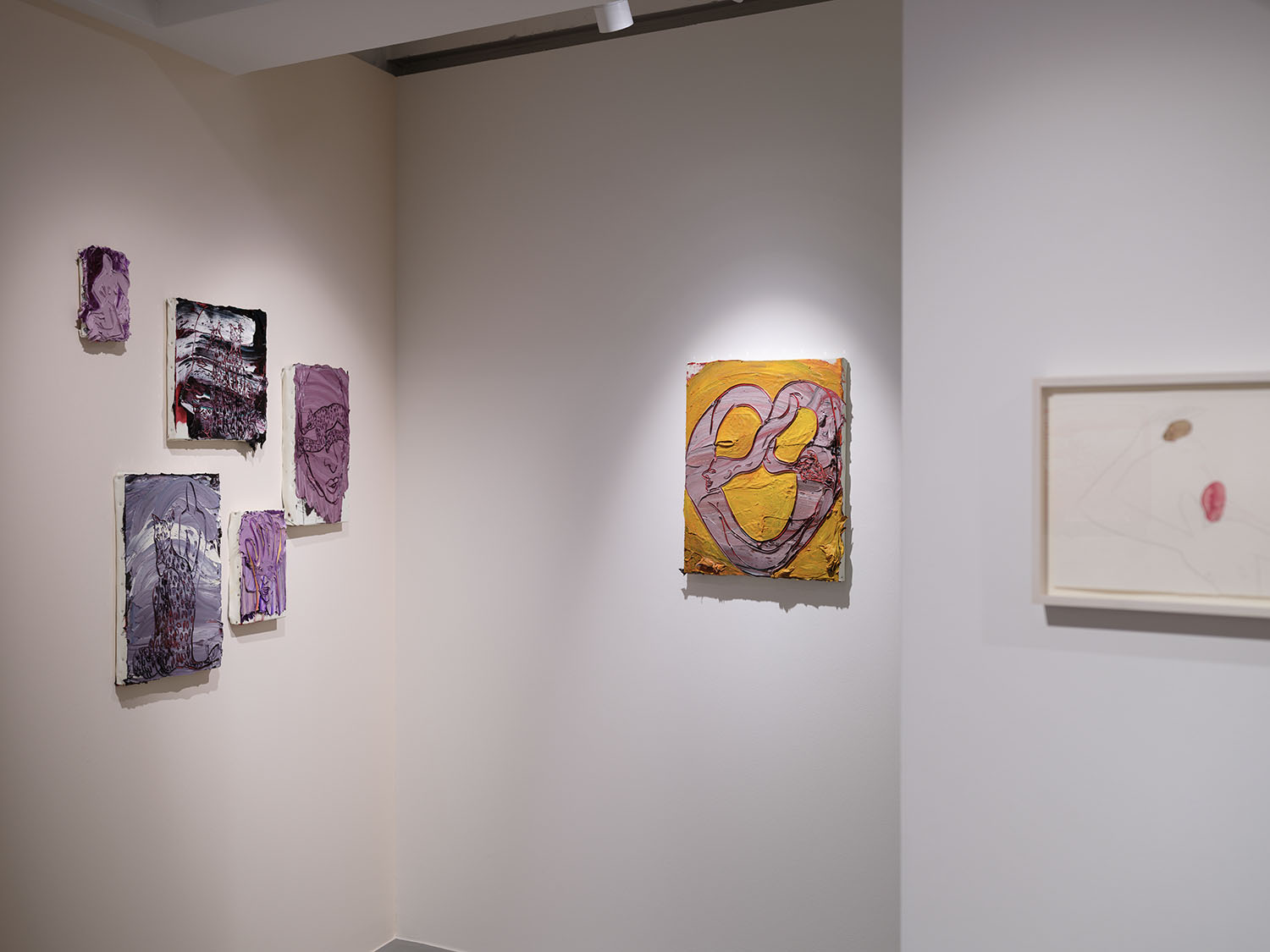
In her paintings, Rikako Kawauchi builds up forms within the picture plane by layering pigment — a mixture of oil paint and medium — thickly onto the canvas in multiple layers. She then makes a series of sharp incisions that resemble the folds of the entrails of a living creature into this expansive surface, using a painting knife. The subjects that she repeatedly depicts are various animals: the jaguars, coyotes, sloths, and snakes that Claude Lévi-Strauss singles out in his structural analysis of myths. As the title indicates, this exhibition focuses on humans, tigers, and the relationship between them.
Kawauchi’s drawing method, which involves the act of dredging up various forms from multilayered planes of color, is conditioned by the physical constraints of the pigment hardening due to how viscous it is. As such, the speed at which she carves and draws becomes the most crucial element in her creative process. This self-imposed constraint invariably demands of Kawauchi a hand that can transcend thought, so to speak — a kind of passageway connecting to the exterior of the container that is the self, the subject, without having to invoke the Surrealist practice of automatism. In this sense, Kawauchi consciously embraces and incorporates into her painting the intermediary nature once exercised by those who controlled and operated the codes that govern narrative, and took on the role of transmitting myths.
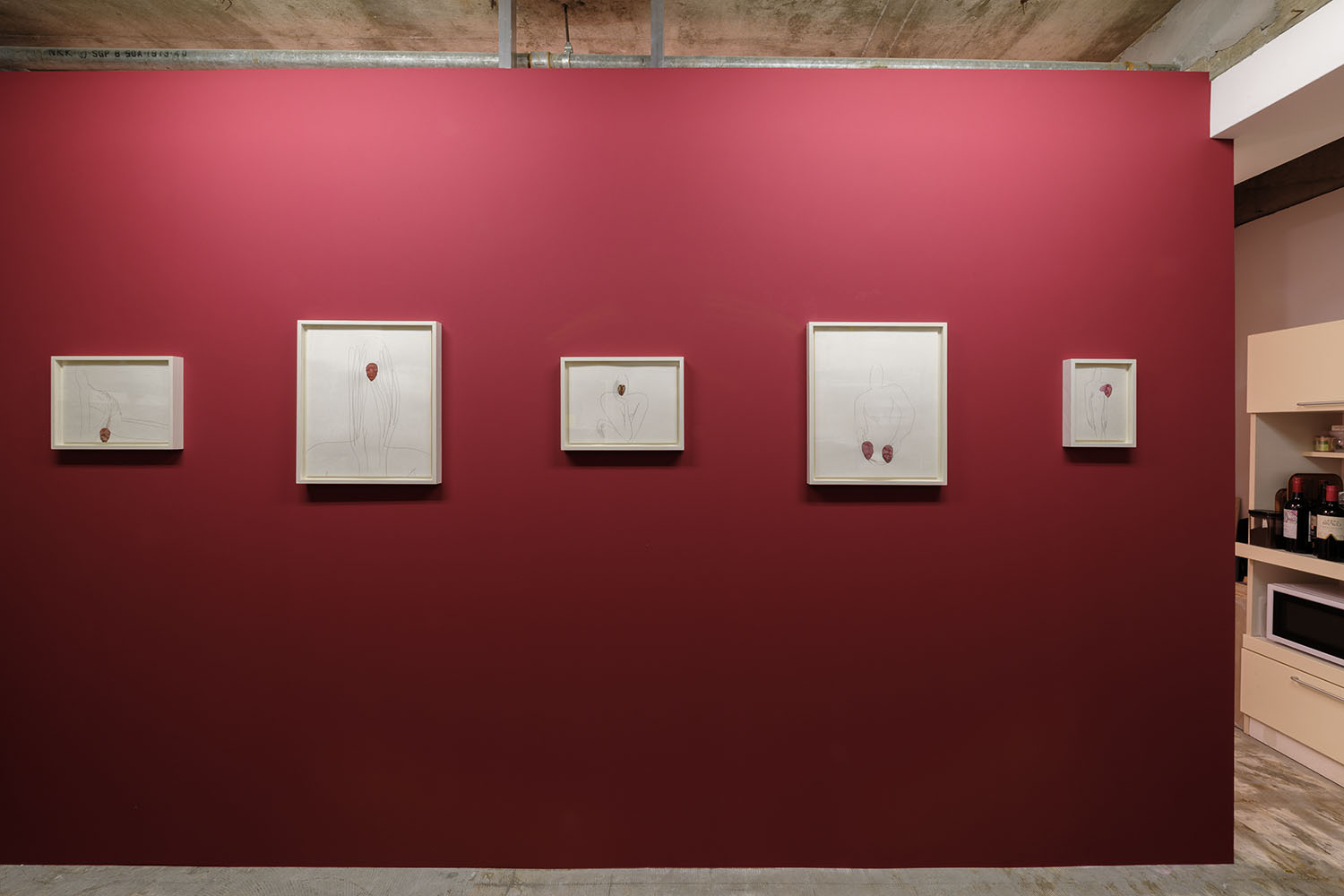
This mode of artistic expression, where the line occupies a privileged position, naturally cannot be confined to oil painting alone. Kawauchi has previously attempted to expand this approach to more diverse forms of expression: drawings, marble, three-dimensional sculptures that involve the act of carving out space using wire or neon tubes, and even embroidery on fabric. What all of these clearly share in common is a kind of dynamic force that lies latent within the line. Like lines that extend in multiple directions, Kawauchi’s recent artistic forays have achieved a kind of cross-disciplinary connection across various fields. What she has pursued there is precisely a kind of “other” that transcends the self.
The aversion that one feels towards food — or more precisely, the act of ingestion that involves food entering the body via the mouth, where the boundary between self and other becomes blurred — has consistently held a kind of existential significance in the context of Kawauchi’s creative practice. This act, indispensable for sustaining life, is also deeply rooted in the problem of otherness. As such, her richly colored, multilayered canvases, as representations of the fluctuations between self and other that permit a kind of shuttling back and forth across them, have become spaces capable of summoning the invisible other.
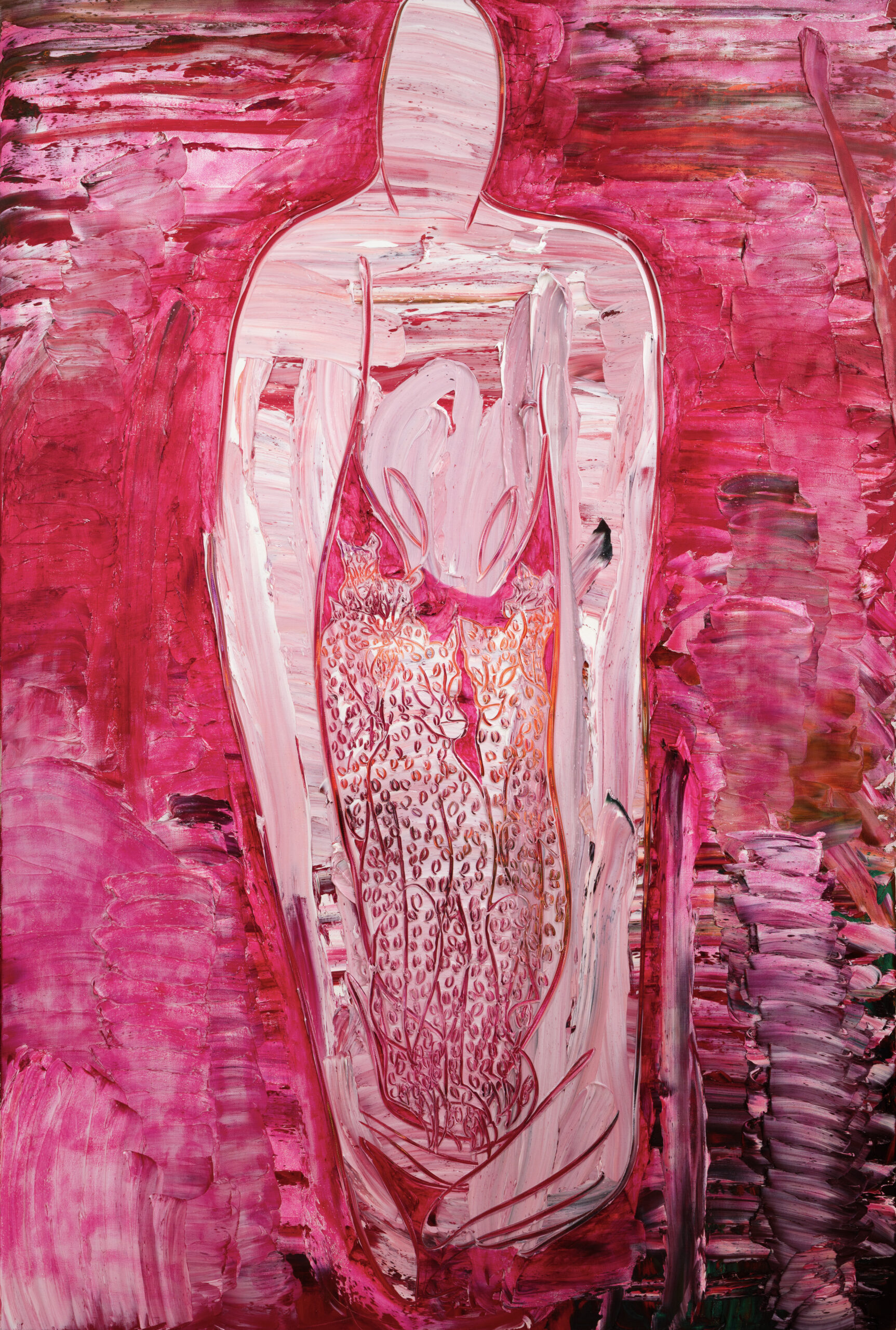
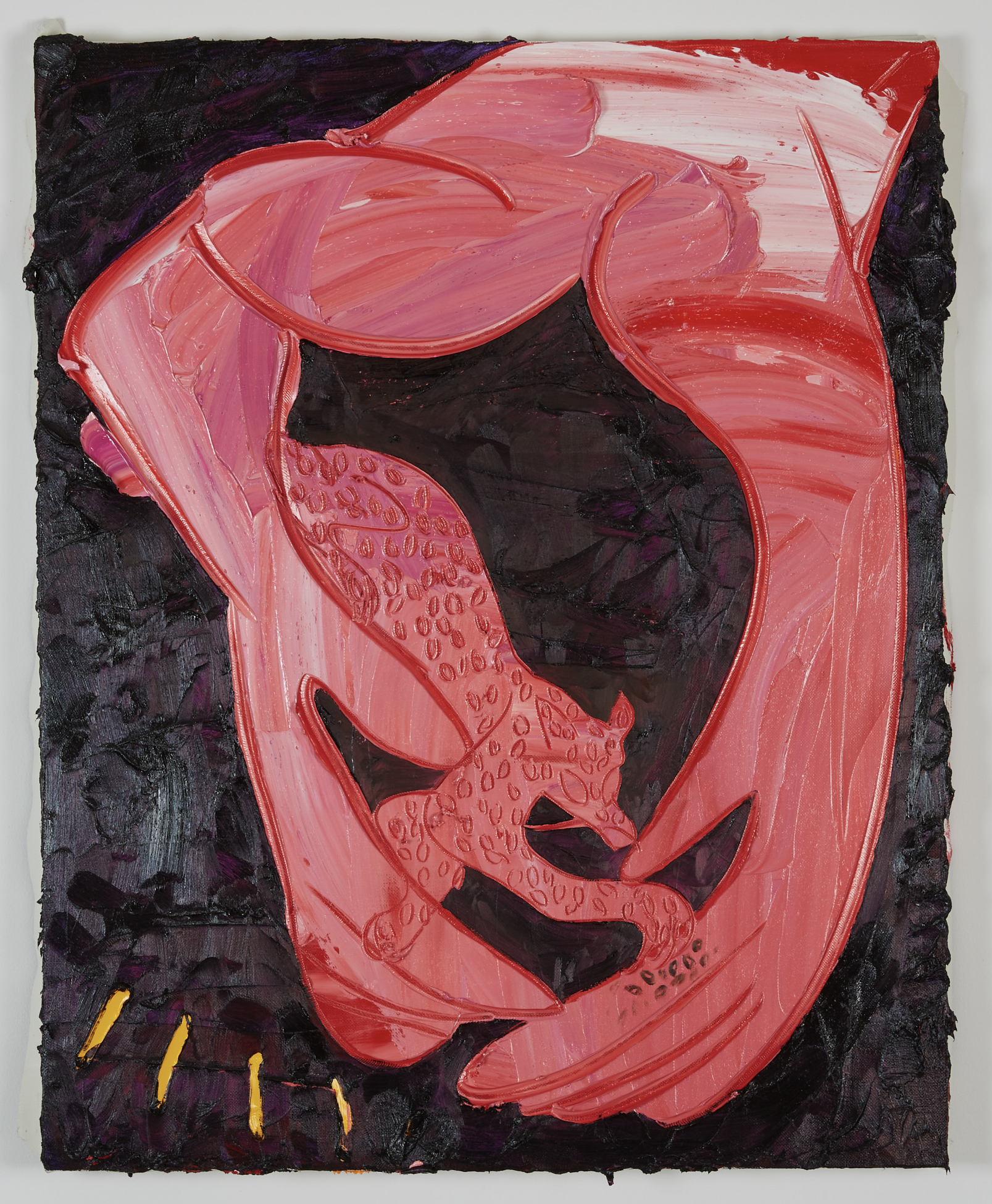
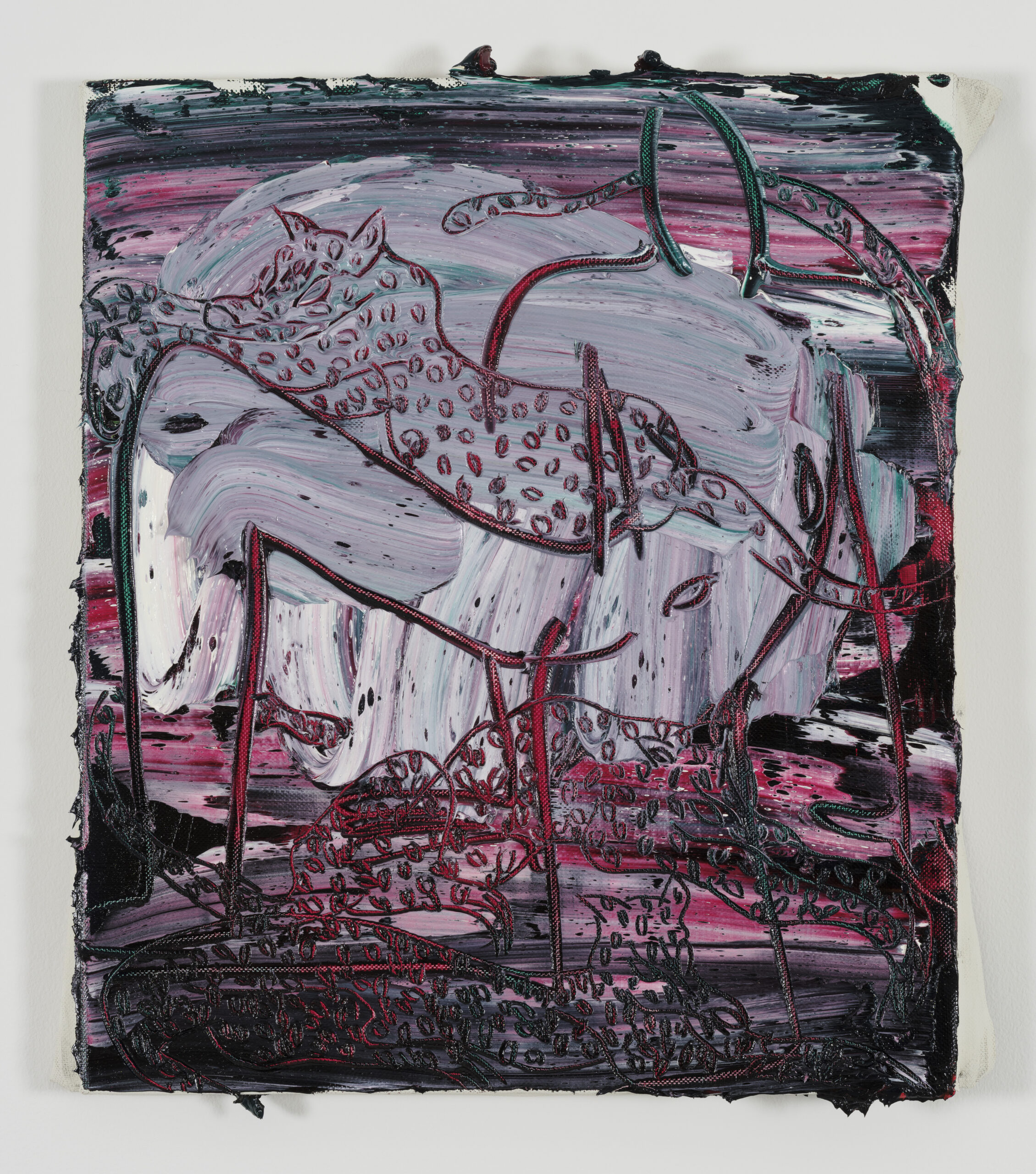
In this exhibition, drawing on her knowledge of cultural anthropology and the poetry of William Blake, Kawauchi observes how the binary opposition between “culture” and “nature” in both humans and tigers is transcended. Whether they are depicted as being subsumed (House of the garden), circulating (Loop), or intermingling (Time to feed the milk, time to become a tiger), their postures reveal a relationship of rich profundity. What ought to be gleaned from this ambivalent relationship between humans and tigers, with their distinctive stripes, is a feeling of doubt surrounding the very essence of self and other, as well as the potential for generative change. This is undoubtedly connected to the fact that, even as it is grounded in painting, itself a malleable medium, Kawauchi’s methodology has expanded to include collaborations with others, although this is something that is restricted to her works made of marble, neon tubes, and fabric. The diversity of Kawauchi’s works, which train their gaze on various boundaries while excavating ancient layers of human memory as they wager on the plurality and generative change of existence, may function as signs that permit us to arrive at a renewed understanding of individual lives, as well as our world in this era of fierce division.
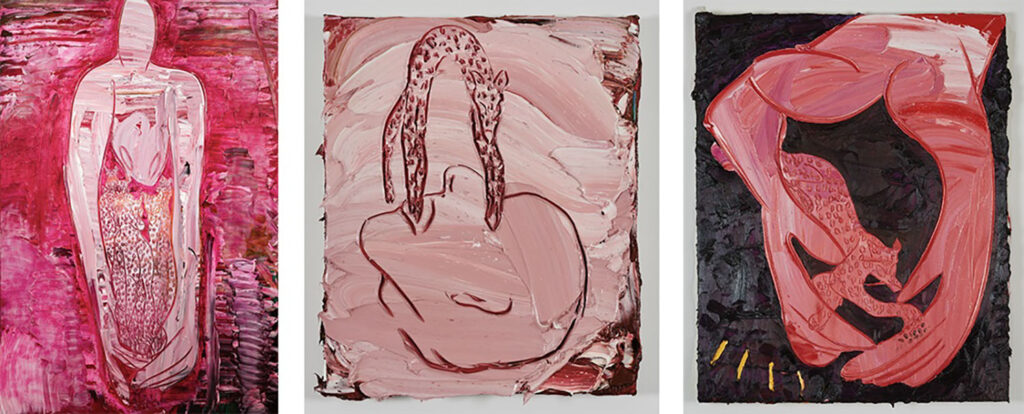
Left: House of the garden, 2025, oil on canvas, 1940 × 1303 mm
Center: Loop, 2025, oil on canvas, 455 × 380 mm
Right: Where the Tiger Has Touched, 2024, oil on canvas, 910 × 727 mm
Dates: 10/25 (Sat.) – 12/28 (Sun.), 2025
Opening Reception & Artist Talk: 10/25 (Sat.) 2pm-
Hours: 9:30am–4:30pm (Last Admission: 4pm)
Closed on Mon. (Open on 11/3, 11/24), 11/4, 5, 25, 26
Venue: Kurobe City Museum (1035 Horikiri, Kurobe City, Toyama)
More Info: https://kurobe-city-art-museum.jp/2025/08/14/rikako-kawauchi-the-shape-of-water-hardens-into-stone/

The dung of the palm trees that grows from the feet becomes fruit and blends into the jungle. Everyone wants it very much., 2024. oil on canvas, 2273 × 5454 mm
Dates: 10/29 (Wed.) – 12/11 (Thu.)
Venue: anonymous bldg. (5-1-25 Minami Aoyama, Minato-ku, Tokyo)
*This is an art exhibition building near Omotesando Station and the Omotesando intersection.
As entry into the building is not permitted, please view the exhibit from the sidewalk.
Organized by: anonymous art project
More Info: https://anonymous-collection.jp/schedule/
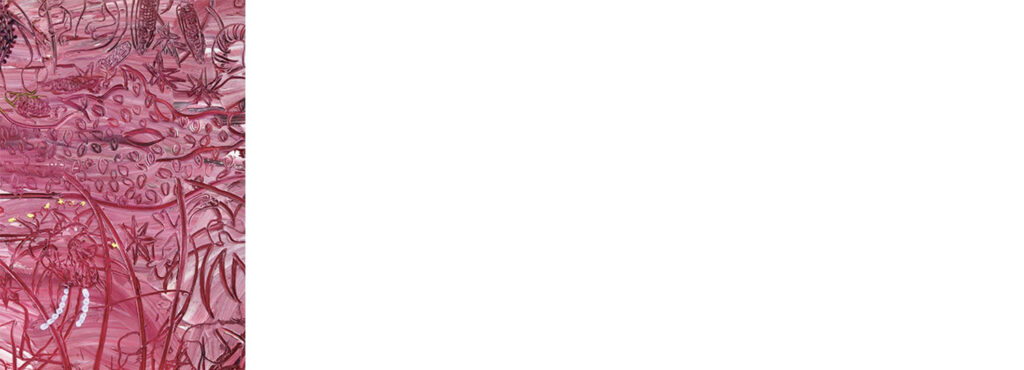
Jump Over Palm Trees (detail), 2025, oil on canvas, 1940 × 2590 mm