WAITINGROOM (Tokyo) is pleased to present “Fern Flower,” a solo exhibition by Naho Kawabe, on view from Saturday, April 4 to Sunday, May 3, 2026. Kawabe, known for her careful research and use of diverse materials, has explored themes such as the history of the coal mining industry and migration through techniques including video, collage, and installation. In this new works exhibition, Kawabe reflects on the complex relationship between ferns, industrial energy, and labor. The remains of fern plants that lived during the Carboniferous period transformed into fossil fuels, which in turn became the energy powering large-scale infrastructures that have continued to develop since modern times. Engaging both time and space, Kawabe translates this history poetically and theatrically, inviting viewers to explore and imagine the interplay between past, present, and future. The solo exhibition is centered on new installation works combining charcoal and electrical materials, as well as two series of photo-collage works. These are complemented by a charcoal-based two-dimensional work and a selection of drawings. We invite you to take this opportunity to view the new works by Kawabe, whose practice has received significant recognition both in Japan and internationally, including participation in the Aichi Triennale 2025 and the receipt of the 4th Fukuoka Art Award.
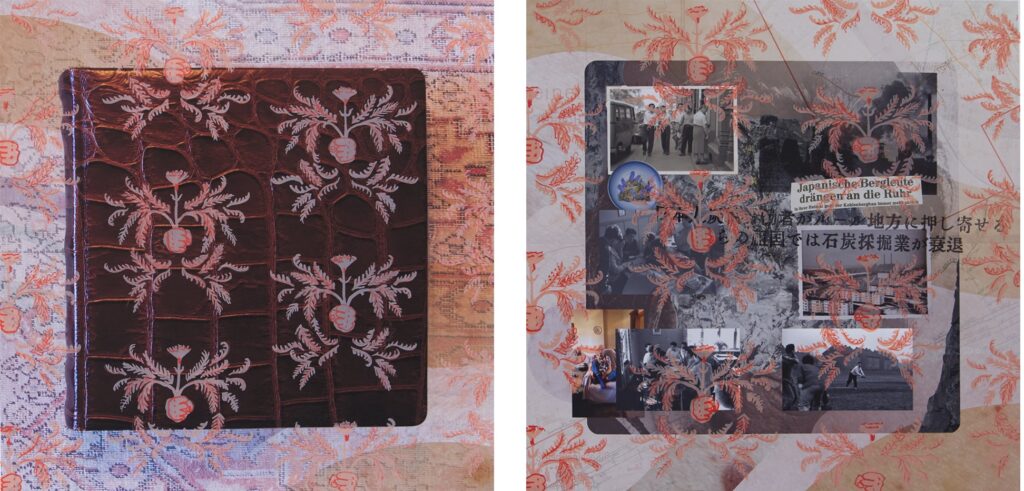
Fern and Carnation – Immigrés, donc travailleurs, 2026, lithograph on c-print, set of 9 (each 400 × 400 mm)
About the artist, Naho Kawabe
Born in Fukuoka in 1976. She graduated from Musashino Art University in 1999 and University of Fine Arts of Hamburg with MFA degree in 2006. Currently lives and works in Germany and Japan. Kawabe’s practice centers on the transformation of materials. Working across media, she creates video, photography, installations combining multiple objects, as well as sculptures using glass panels and coal. In her process, careful research plays a crucial role, as she places strong emphasis on the social contexts of materials. By examining these contexts such as their origins, surrounding historical events, and contemporary issues, Kawabe “transforms” materials that carry multiple layers of information through her works. This act of “transformation”—whether through dismantling, recombining, or allowing materials to evoke other motifs—forms the basis of her artistic practice. By carrying out these transformations with her own hands, Kawabe continues to explore ways of giving form to the invisible conditions shaping our world today. Kawabe is active both in Japan and internationally. Her recent exhibitions include “The 4th Fukuoka Art Award Winners Exhibition” (2026, Fukuoka Art Museum, Fukuoka), Aichi Triennale 2025 “A Time Between Ashes and Roses” (2025, Aichi Arts Center, Aichi Prefectural Ceramic Museum, Seto City, Aichi), group exhibition “Japaner im Revier Aufbruch ins Fremde?” (2024, Japanisches Kulturinstitut, Köln, Germany), group exhibition “WINDS OF ARTIST IN RESIDENCE 2023 3rd Period: Urban Phenomenology―Just what is it that makes our future so uncertain, so appealing?” (2024, Fukuoka Asian Art Museum, Fukuoka), solo exhibition “Black and Green” (2022, TOM REICHSTEIN CONTEMPORARY, Hamburg, Germany), Naho Kawabe, Utamura Hanae “STRATA” (2022, WAITINGROOM, Tokyo), group exhibition “Exhibition of New Collections” (2022, Fukuoka Art Museum, Fukuoka), solo exhibition “Blooming Black” (2019, Boxes Art Museum, Guangzhou, China), solo exhibition “Save for the Noon” (2018, WAITINGROOM, Tokyo), solo exhibition “In Other Words” (2018, konya-gallery, Fukuoka) and many others.
Where Prehistory Meets the Future, Records Entwine with Memories
Around 300 million years ago, the Earth experienced a verdant era dominated by massive ferns. Over the course of millennia, the remains of these plants were compressed into layers of coal, and during the 18th and 19th centuries, the Industrial Revolution transformed this natural resource into a vast energy force that reshaped the world’s infrastructure, economies, and everyday life. Even today, these ancient ferns continue to be burned, and the energy they release still courses through our world.
Ferns reproduce via spores and do not bloom, which makes the title “Fern Flower” inherently paradoxical. Kawabe reflects on the possibility of ferns flowering―that is, on the (im)possibility of achieving an idealized utopia through the continuous consumption of fossil fuels. She observes: “The promise of liberation from labor through infinite energy, and the emergence of a happy utopia through technological progress—perhaps such promises of fulfillment were like the fern flower.” The ferns that became the origin of the modern myth of progress, and the coal industry that laid the foundation for contemporary technological society, are central to Kawabe’s new installation works. Combining coal and electrical materials, her works bring this complex entanglement of nature and technology into a tangible spatial experience.
At the same time, Kawabe’s long-standing interest in migration connects the centuries-long history of the coal industry―and its surrounding global political and economic dynamics―to the everyday lives of individuals. Since 2022, she has been researching Japanese workers who migrated to Germany to work in the coal industry. Her latest photo-collage series draws on this research, combining 1960s photographs of the workers with period magazines and newspapers, as well as contemporary color images. Through these works, she brings to life the personal stories of Japanese workers from that era, weaving them into an imagined family album. In this series, Kawabe employs lithography to symbolically intertwine ferns and carnations, linking industrial forces with the lived experiences. Carnations have historically symbolized resistance and labor movements. By combining them in a chimeric form, the individual lives of miners are drawn out from the broader historical framework of coal-mining and fold back into it again.
Within the cycles generated throughout Kawabe’s creative process, individual experiences and history reflect and converse with one another in an ongoing dialogue. Traversing diverse materials and motifs, her carefully constructed works invite audiences to imagine the history and future of energy, technology, and ecology, while tracing the imprint of labor and industry within these larger currents.
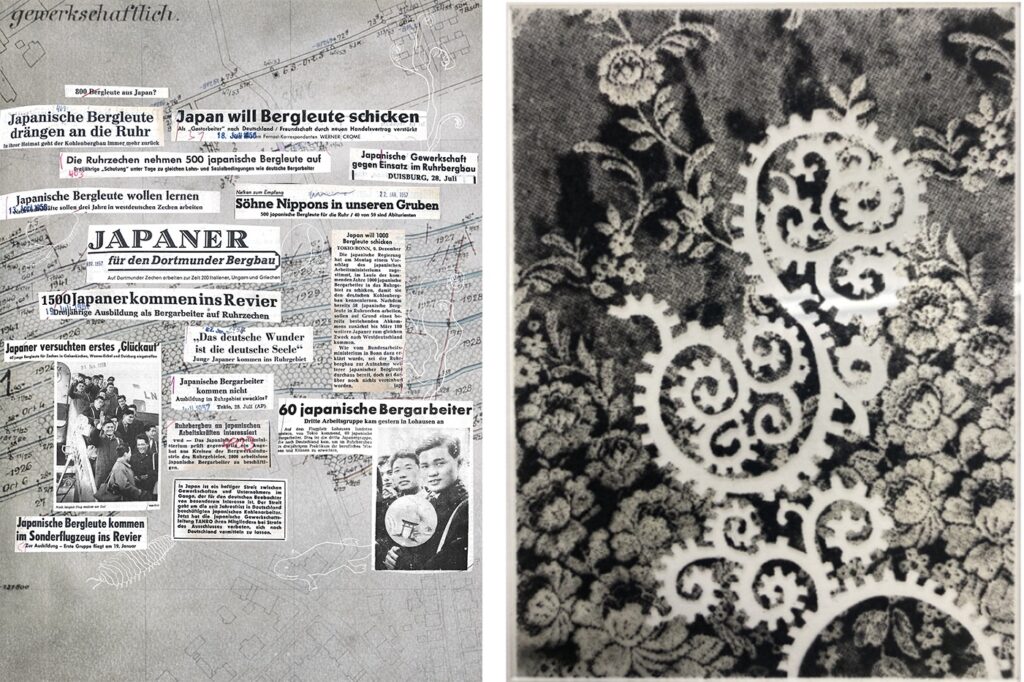
Left: Japaner im Revier, 2024, inkjet print, set of 3 (each 420 × 297 mm)
Right: Arabesque, 2020, charcoal, lacquer spray, glass, 396 × 296 mm
Concurrent Exhibition : Group Exhibition “The 4th Fukuoka Art Awards Winners Exhibition”
Dates : 3/28 (Sat) – 6/21 (Sun), 2026
Hours : 9:30am-5:30pm
*Last admission at 5:00pm.
*The gallery opens at 1:30pm on 3/28 (Sat).
Closed on Mondays (or the following weekday if Monday falls on a national holiday)
*The museum and galleries may be closed due to the rotation of exhibits or unforeseen circumstances. Please check the latest information on the museum’s home page.
Venue : Modern and Contemporary Art B, 2nd Floor, Fukuoka Art Museum
(1-6 Ohori Koen, Chuo-ku, Fukuoka city, Fukuoka prefecture)
More info : https://www.fukuoka-art-museum.jp/en/collection/?q=modern
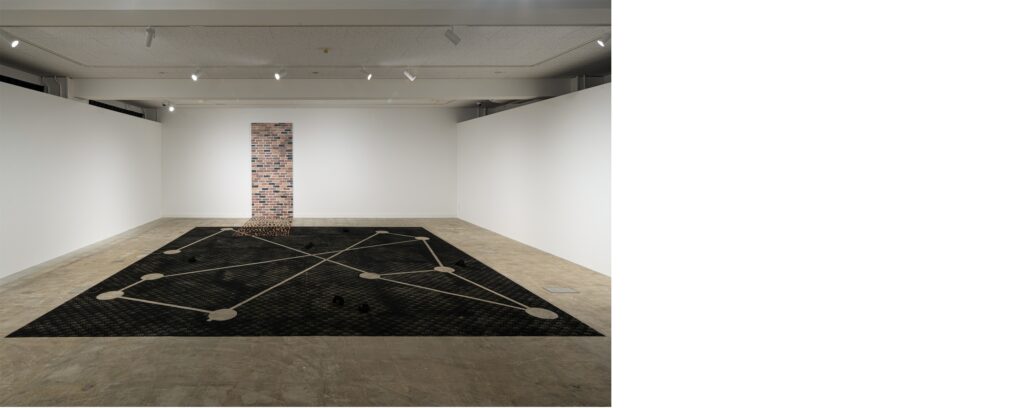
In Search of Utopia ( – Et in Arcadia ego), 2024, charcoal, coal, chamotte, urethane, rubber, plaster, photographs, dimension variable
Photo by Ittoku Kawasaki
