Organized by WAITINGROOM (curated by Kokoro Kimura), the two-person exhibition “Whose Desire?,” featuring Lea Embeli and Layla Yamamoto, will be on view from Saturday, February 14 to Wednesday, February 25, 2026, at NIOAA GALLERY TOKYO (The Coffee Brew Club Gallery Room). While referencing different fields—AI and anime and manga culture—both artists examine how specific images are created, circulated, and shared, revealing the social norms and power structures embedded in the images themselves and within our inner lives. The exhibition explores “ideals” that are sometimes desired from within and sometimes imposed on our bodies. We invite you to see how the artists gather and transform the overlooked distortions and frictions that emerge in the process of approaching these ideals.
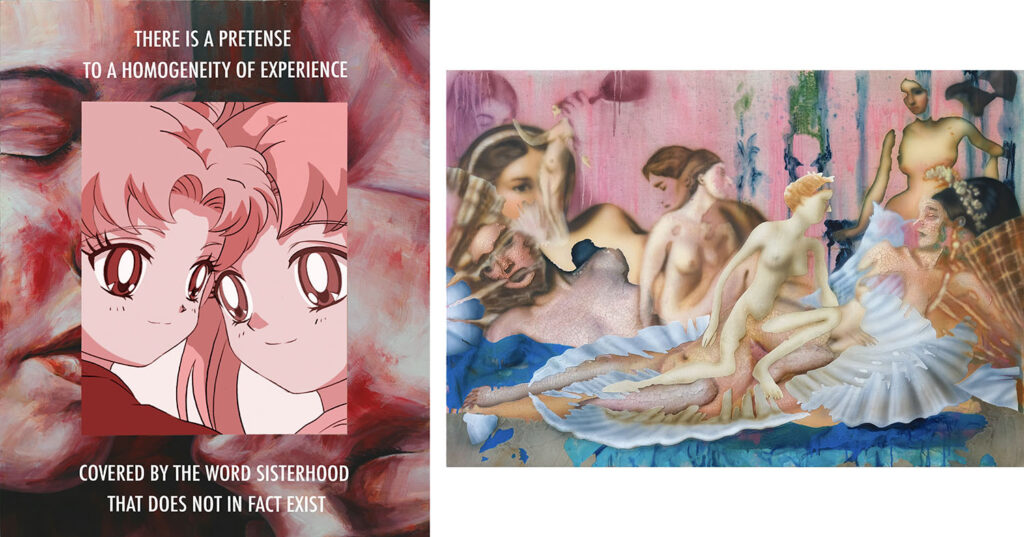
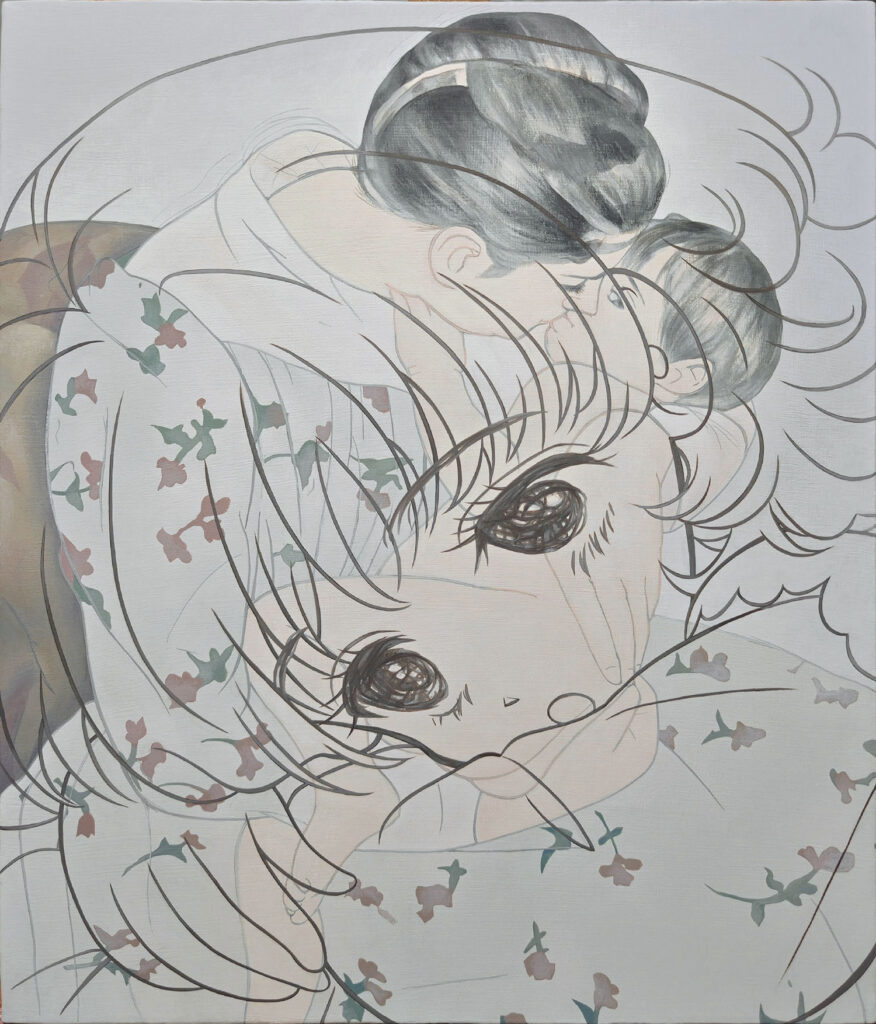
Left : Layla Yamamoto, Who said it was simple? 7, 2026, acrylic on canvas, 910 × 727 mm
(Reference Image)
Right : Lea Embeli, Reformed from a swirl of ashes and starlight, 2025, acrylic, linen on panel,
900 × 1300 × 30 mm
The question “Whose Desire?” might seem to aim at separating the desiring subject and the desired object. In this exhibition, however, the question instead creates a space of hesitation before such separation, drawing our attention to the complex entanglements of desires between self and others, and between individual and collective, around socially constructed ideals.
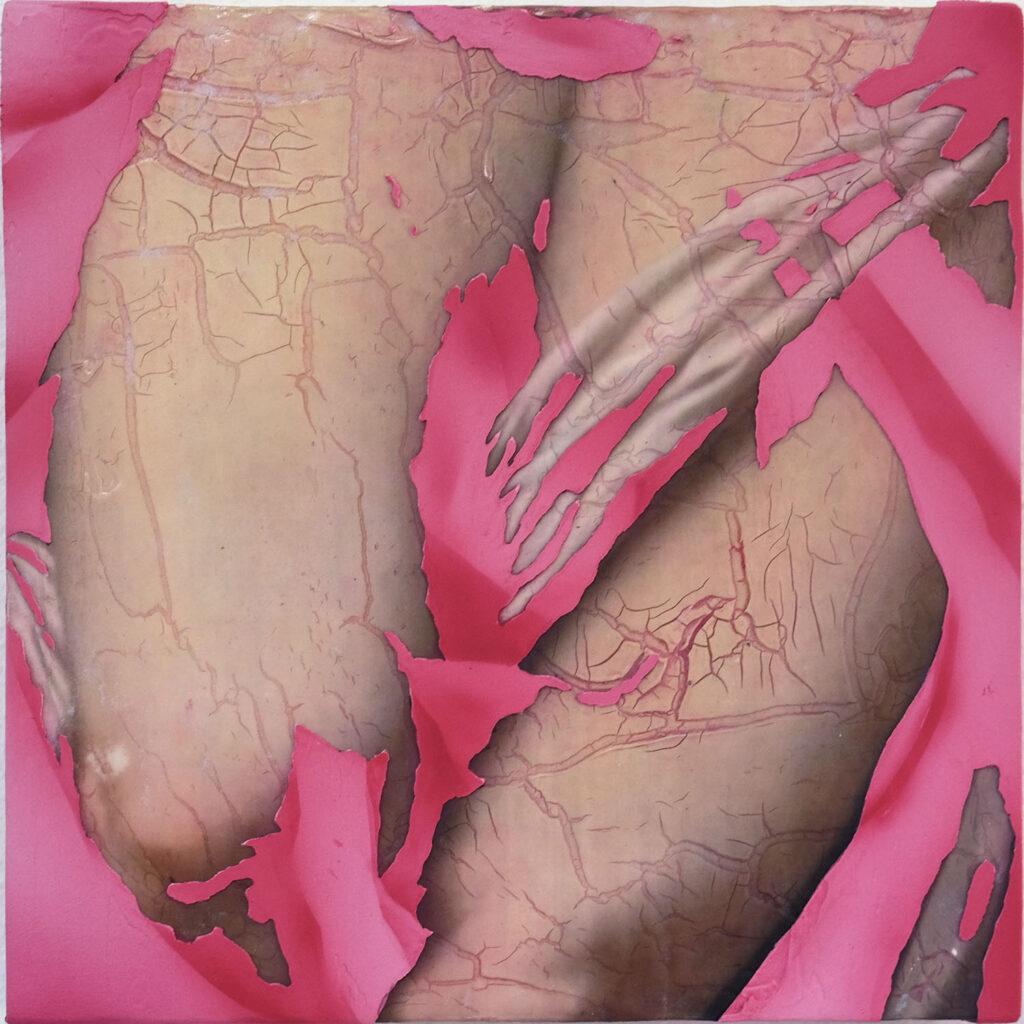
Lea Embeli references traditional depictions of women in Western art history and transforms them with AI—a contemporary collective of intelligence and ideals. In works inspired by Venus, the goddess of Roman mythology, multiple imperfect images generated by AI models are layered. By tracing the long history of “replicating ideal bodies” in Western art, while simultaneously preserving the misinterpretations that arise through dialogue with AI, Embeli reveals alternative possibilities of beauty erased during the homogenization of ideals. Starting with the traditional ideal image, Embeli gathers the residual traces and deviations that appear during its reinterpretation, visualizing both the forces that sustain ideals as norms and the dynamics that disrupt them from within.
Meanwhile, Layla Yamamoto uncovers the male-centered perspectives within anime and manga culture and the its marginalized position in the art world, while exploring new forms of character representation from feminist and queer perspectives. “Sisterhood,” the central theme of her exhibited series, has served as a principle for reconnecting women divided by male-dominated social structures and inherently carries the potential for solidarity that transcends differences. However, as the words of Audre Lorde referenced in this series point out, when sisterhood assumes homogeneity, it risks rendering invisible differences such as race, class, sexuality, and cultural background, while marginalizing the frictions, conflicts, and sometimes ruptures that arise when different positions intersect. Solidarity that suppresses difference can, in turn, reproduce existing power structures.
As demonstrated by the practices of both artists, we desire to conform to, deviate from, overturn, or occupy all—or none—of these states in relation to socially constructed ideals. This constant flow of desire encourages us to look beyond identifying “who” desires or is desired, toward the political, social, and cultural structures that shape how ideals are desired, shared, and reproduced. By reflecting on these structures, we can begin to imagine forms of life that emerge in the gaps and outside normative ideals.
Lea Embeli
Lea Embeli is an artist, mainly working in the field of painting. She graduated from the Faculty of Applied Arts in Belgrade, specializing in Applied Painting, where she also completed her MA studies. During her studies, she was awarded multiple scholarships, including the Ministry of Education, Science and Technological Development scholarship and the Dositej scholarship from the Foundation for Young
Talents. She is the recipient of the Aleksandar Tomašević Award for academic excellence, the ULUPUDS Award in the field of applied painting, and the Vučković Award for young artists from her hometown, Pančevo. In 2021, she received the MEXT Japanese government scholarship for research in oil painting at Tokyo University of the Arts, where she became a regular student and has been pursuing her second MA since April 2023. She graduated from Tokyo University of the Arts in March 2025 and continues to work as an artist between Japan and Serbia. Beyond painting, she began illustrating books in 2016 for publishers such as “Zavod,” “Bigz,” and “Kreativni centar,” as well as the French publisher “Fleurus.” She has also worked in animation as a character designer and concept artist for studios including ToBlink Studios and Bunker in Serbia, as well as Animoon Studios in Poland. Additionally, she briefly worked as a teaching assistant in painting techniques at the Faculty of Applied Arts in Belgrade.
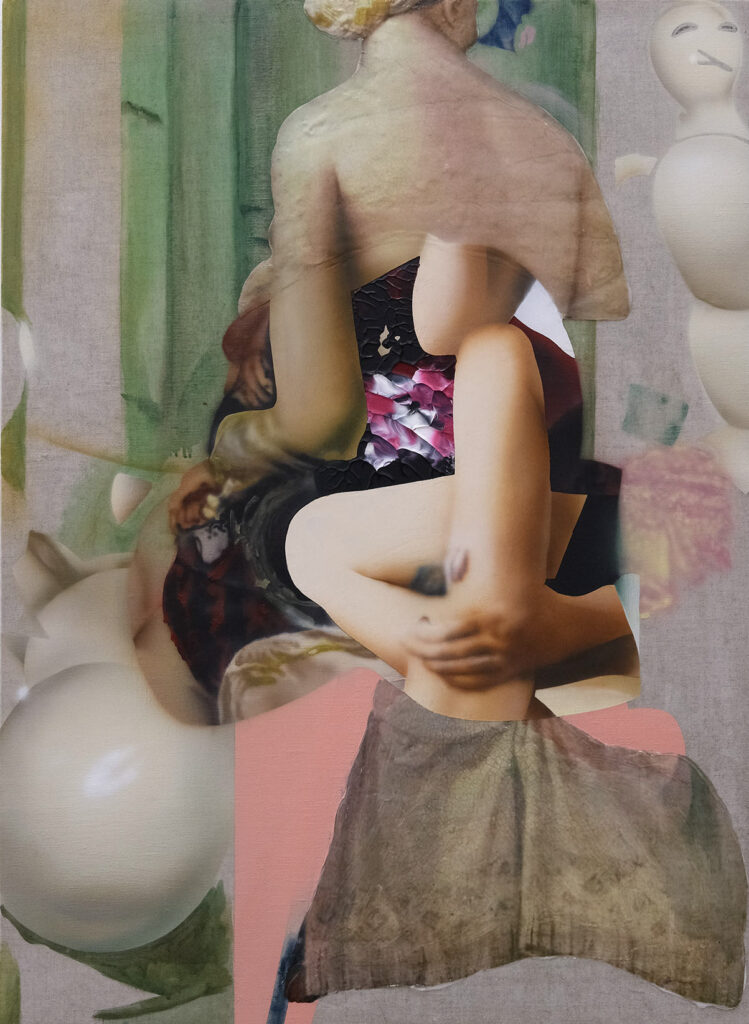
Left : Seated, 2024, acrylic, linen on panel, digital print, 900 × 600 mm
Right : Supernova 1/2, 2025, acrylic on panel, digital print, 250 × 250 mm
Layla Yamamoto
Layla Yamamoto is a Tokyo-based artist who investigates socio-political themes in Japan through feminist and postcolonial lenses. Her work critiques the history of nuclear power in postwar Japan and the structural sexual violence embedded in Japanese society, while reinterpreting anime and manga culture through feminist and queer perspectives. She studied at the School of the Art Institute of Chicago and, upon returning to Japan, has primarily exhibited her work domestically. In addition to her artistic practice, Yamamoto has served as a guest lecturer at Tokyo University of the Arts, Joshibi University of Art and Design, and the University of Maryland, Baltimore County, contributing to the field of education. She also works as an independent curator; her first curatorial project, which focused on state control over women’s bodies and sexuality in Japan and its historical context, was awarded first place in the 2024–25 international open call by the New York–based nonprofit arts organization apexart.
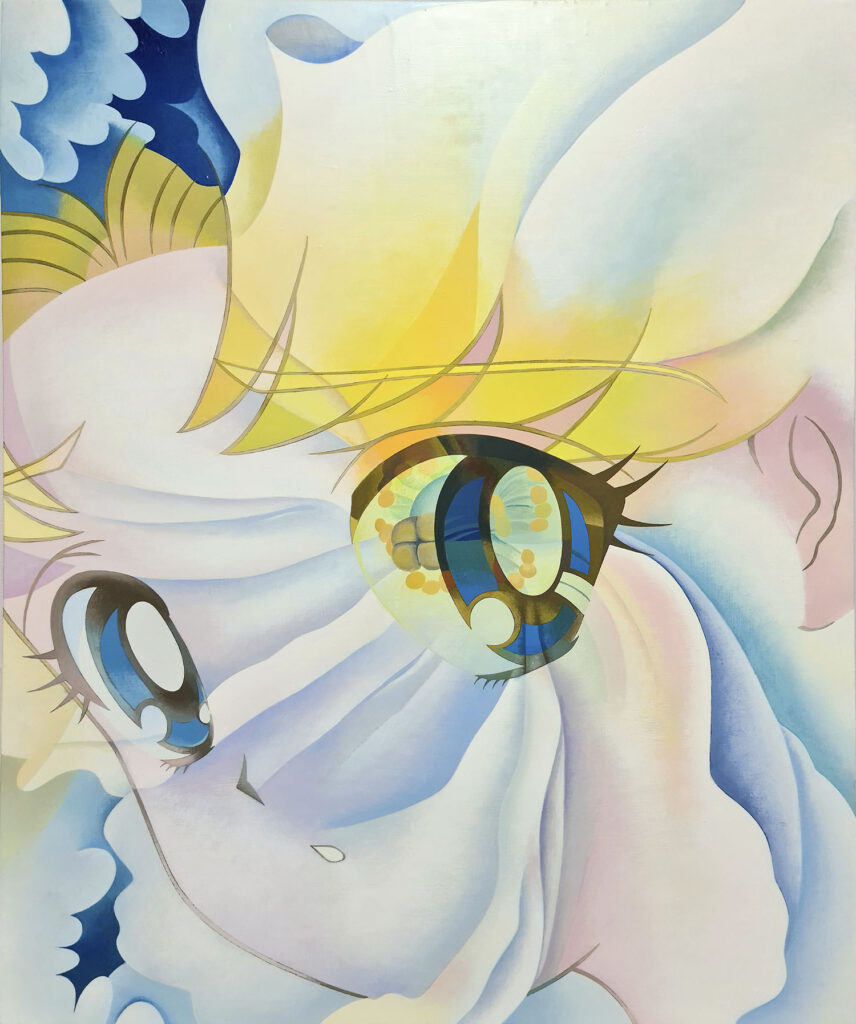
Left : I hate flowers 19, 2024, acrylic on canvas, 727 × 606 mm
Right : Whispers of Defiance 1, 2025, acrylic on canvas, 530 × 455 mm
Lea Embeli
1994 Born in Pančevo, Serbia
2017 University of Arts in Belgrade, Faculty of Applied Arts, Bachelor’s degree, Applied Painting
2018 University of Arts in Belgrade, Master’s degree
2021 Tokyo University of the Arts, Research Student, Oil Painting
2025 Tokyo University of the Arts, Graduate School of Fine Arts, Master’s degree, Oil Painting
Currently lives and works in Japan and Serbia.
SOLO EXHIBITIONS
2025 Venus is the Hottest Planet, Shimokitazawa Arts, Tokyo, Japan
2020 What Do You Think?, X Vitamin Gallery, Belgrade, Serbia
2019 Out of Touch, Ostavinska Gallery, Belgrade, Serbia
GROUP EXHIBITIONS
2025
Meet Your Art Festival 2025, Terrada Warehouse, Tokyo, Japan
The Self and the Other, Medel Gallery Shu, Tokyo, Japan
Art Award Tokyo Marunouchi, Gyoko Underground Gallery, Tokyo, Japan
Pithecanthropus, Nihombashi Mitsukoshi Honten, MITSUKOSHI CONTEMPORARY GALLERY, Tokyo, Japan
Bridge (Collaboration Exhibition : biscuit gallery × NISO [London, UK]), biscuit gallery, Tokyo, Japan
2024
Sorry, this is (not) for you (Atami Art Grant), Ozaki Land Bldg., Shizuoka, Japan
Grid Next, biscuit gallery, Tokyo, Japan
Shibuya Awards, Hillside Terrace, Tokyo, Japan
2023
Watowa Art Award, Watowa Gallery, Tokyo, Japan
Beauty of Big Format, Salon of the Belgrade Museum, Belgrade, Serbia
Miraiten, Nichido Gallery, Tokyo, Japan
Wherever You Are, That’s Home, JR Ueno Gallery, Tokyo, Japan
2021
51st Art Salon, National Museum, Pančevo, Serbia
2020
Autumn Art Biennale, Sombor, Serbia
Private Value, Swiss Residence, Belgrade, Serbia
2018
Festum, Student Cultural Center, Belgrade, Serbia
2017
This Changes Everything, Niš Art Foundation, Niš, Serbia
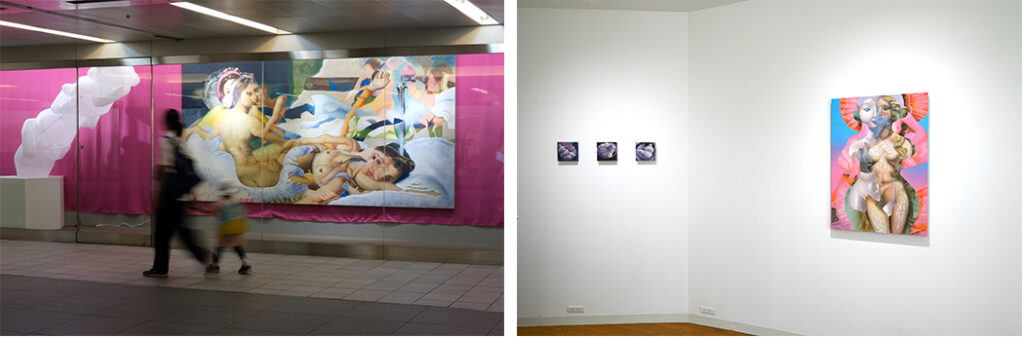
Left : Group Exhibition “Art Award Tokyo Marunouch” (2025, Gyoko Underground Gallery, Tokyo, Japan) installation view
Right : Solo Exhibition “Venus is the Hottest Planet” (2025, Shimokitazawa Arts, Tokyo, Japan)
installation view, Photo by Hiroko Suzuki
Layla Yamamoto
1995 Born in Tokyo, Japan
2014 Graduated from Tokyo Metropolitan Senior High School of the Arts, Japanese Painting
2015- School of the Art Institute of Chicago
Currently lives and works in Tokyo.
SOLO EXHIBITIONS
2022 Who said it was simple?, Ritsuki Fujisaki Gallery, Tokyo, Japan
2021 After the Quake (Produced by SOUYA HANDA PROJECTS), Fukushima Building, Tokyo, Japan
GROUP EXHIBITIONS
2025
Atomic Cowboy: The Daze After / Take It Home: for (__) Shall Not Repeat the Error, NJCU Visual Arts Gallery, New Jersey, USA
”Deconstructive Decoration” by Souya Handa Projects, Art Ka Bifun Ka Paichu, Tokyo, Japan
In the beginning, Womankind was the sun – Weren’t we?, KOTARO NUKAGA Three, Tokyo, Japan
Take it Home, for (__) Shall Not Repeat the Error [Manhattan Project], apexart, New York, USA
2023
Take it Home, for (__) Shall Not Repeat the Error (Travelling Exhibition in Tokyo), Bazuchika, Tokyo, Japan
Take it Home, for (__) Shall Not Repeat the Error, SOGO Hiroshima, Hiroshima, Japan
UTSUTSU-A LIMINALISM OF JAPANESE CONTEMPORARY ART, Pellas Gallery, Boston, USA
NEW ART OF YOUNGER 2023, oto gallery, Osaka, Japan
Usual group show at an emerging gallery, Ritsuki Fujisaki Gallery, Tokyo, Japan
2021
Bangkok Biennial 2021 HOMETOWN TOKYO, same gallery, Tokyo, Japan
2020
New New New Normal, Gallery Momo Projects, Tokyo, Japan
2019
Multi-Cultural Appropriation, KAWAGUCHI REACTION, Saitama, Japan
2016
Draw on Raw Exhibition, Lemoart Gallery, Berlin, Germany
Art Bash 2016, School of the Art Institute of Chicago, Chicago (IL), USA
Noisy Kids Show, Altspace, New York, USA
On the VERGE, RHE Siragusa Gallery, Chicago (IL), USA
2012
The 8th Belladonna Art Exhibition, TOKYO METROPOLITAN ART MUSEUM, Tokyo, Japan
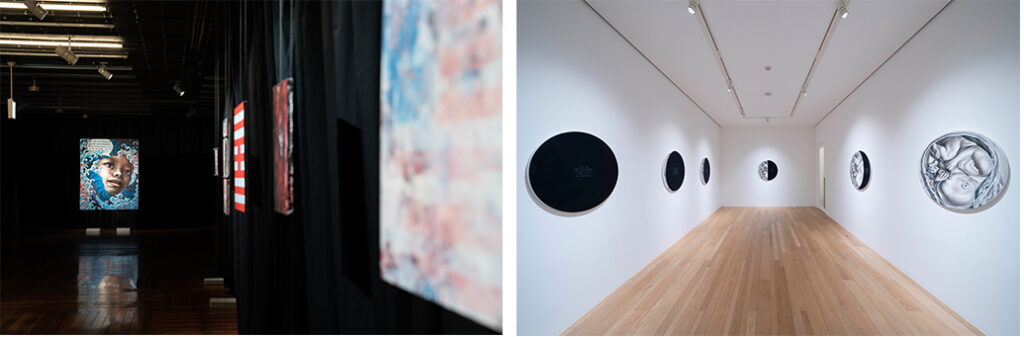
Left : Solo Exhibition “After the Quake” [Produced by SOUYA HANDA PROJECTS] (2021, Fukushima Building, Tokyo, Japan) installation view Photo by Miri Lin, Courtesy of Souya Handa Projects
Right : Group Exhibition “In the beginning, Womankind was the sun – Weren’t we?”
(2025, KOTARO NUKAGA Three, Tokyo, Japan) installation view, Photo by Kenji Agata
